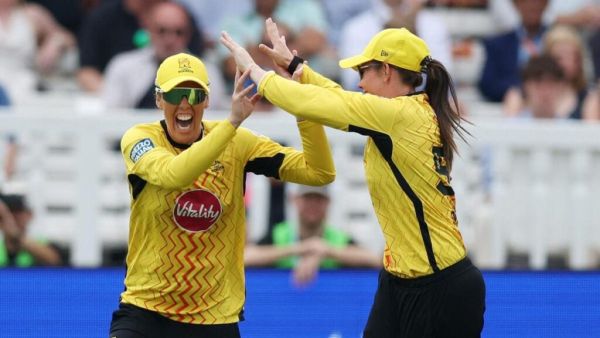
Phoebe Litchfield’s dismissal in the Hundred final, caught by Georgia Adams at short fine leg off Charley Phillips’ bowling, should have been ruled as a dead ball, the MCC said on Wednesday.
The Trent Rockets defeated Litchfield’s side Sunrisers Leeds by eight wickets to lift its maiden women’s Hundred final.
Litchfield, the highest run-scorer in the competition, was batting on 10 off 4 balls in the final when she was caught by Adams while trying to lap-sweep Phillips.
ALSO READ |India quells spin threat to triumph in Galle
However, the MCC noted that Adams had moved several places to her left during Phillips’ run-up, which was a violation of Law 28.6 in the rulebook.
“The batter has an absolute right to know where the fielders are, and any change of position, like Adams’ movement during the run up, is a clear violation of this right. Any sideways movement after the bowler begins their run-up, until the striker signifies what shot they will play, is therefore illegal.
“The on-field umpires, who cannot always be expected to spot everything when they have other things to observe, did not see the illegal movement and so the dismissal stood. If they had noticed it, they would have called Dead ball and awarded five Penalty Runs to the batting side,” cricket’s law-making body said in a statement on Tuesday.
Adams, who was adjudged the player of the match for figures of 2/9 with the ball, had described the catch as ‘surreal’ while speaking to reporters after the final.
“I had this sense that she was going to ramp. I saw her take a quick glance at the field behind and she knew that they (the fielders) were both up, and it’s obviously a big part of her game. I thought, if I see her go for it, I’m just going to charge, and thankfully I stuck a hand out and it stuck,” she said.
MCC Law 28.6 Explained
28.6.1 Any movement by any fielder, excluding the wicket-keeper, after the ball comes into play and before the ball reaches the striker, is unfair except for the following:
28.6.1.1 minor adjustments to stance or position in relation to the striker’s wicket.
28.6.1.2 movement by any fielder, other than a close fielder, towards the striker or the striker’s wicket that does not significantly alter the position of the fielder.
28.6.1.3 movement by any fielder in response to the stroke that the striker is playing or that his/her actions suggest he/she intends to play.
Published on Aug 19, 2026