

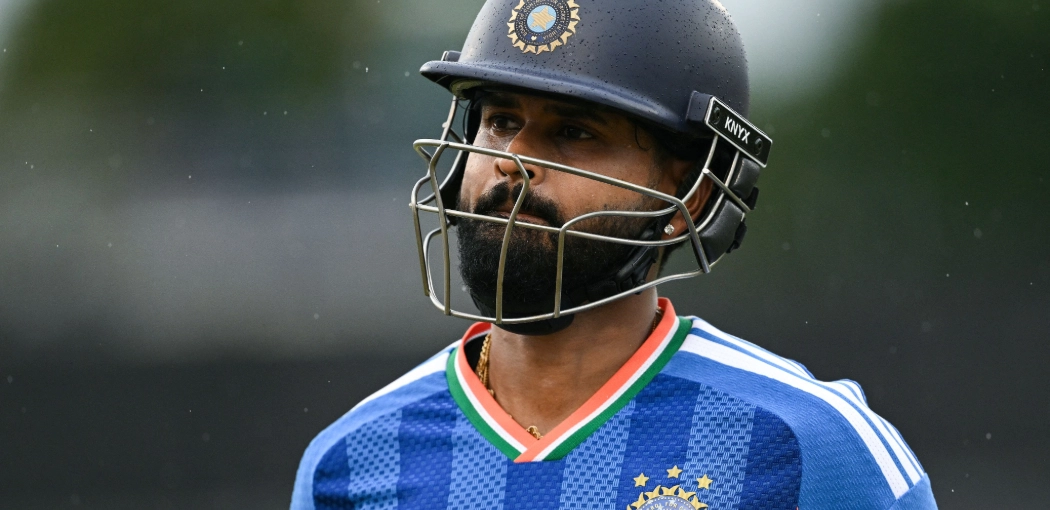
India's performance in the third T20I against Zimbabwe was shaped by a calculated batting display followed by a disciplined bowling effort that left Zimbabwe well short of their target. The 35-run victory completed a 3-0 series sweep and marked Shreyas Iyer's first series win as India's T20I captain.
A Batting Template Built on Sooryavanshi
The manner in which India batted in this match was distinct from a simple powerplay blitz. Vaibhav Sooryavanshi, the 15-year-old opening batter, demonstrated a maturity that went beyond his age. Rather than swinging at everything from the outset, he read the conditions — a pitch that had been used in the second game and was offering more to bowlers — and chose his moments carefully.
He struck a four off the very first ball he faced from Sikandar Raza and then regulated his aggression through the middle overs, reaching his fifty off 31 balls before pushing the tempo later in the innings.His innings of 81 off 49 balls included 8 fours and 4 sixes and came to an end in the 15th over, caught by Brad Evans at long-off off Madhevere's bowling when attempting to go aerial down the ground. By then, he had set a platform that the rest of the batting unit could build upon.
The early loss of Abhishek Sharma — bowled out caught behind off Muzarabani for 2 in the second over for the third time in the series — placed pressure on India to manage the innings sensibly. Ishan Kishan fulfilled that role, making 29 off 26 balls in a partnership with Sooryavanshi that took India through the powerplay and into the middle overs. Kishan's dismissal — bowled by Raza off the first ball of the 11th over — was the only moment the innings stumbled slightly, arriving just as India had reached a strong base of 95 for 1.
Shreyas Iyer brought timing and intent to his cameo, striking two consecutive boundaries off Madhevere in the 15th over as part of a 50-run partnership with Sooryavanshi.
Iyer made 27 off 18 before Evans dismissed him, caught by Madhevere. The loss of Iyer in the 18th over allowed Zimbabwe to exert some control, but Rinku Singh's arrival changed the balance quickly. Rinku scored 25 off 14 balls and struck a six when Madhevere caught the ball at deep extra cover but stepped over the rope before releasing it. He was eventually caught by Madhevere off Evans at the end of the 20th over. Tilak Varma, who came in at number six, made 11 not out and showed composure under pressure. India finished at 192 for 5.Bowling: Yadav and Thakur Set the Tone
India's bowling plan in Zimbabwe's chase was executed with pace and precision in the powerplay. Mayank Yadav dismissed Brian Bennett with the very first delivery of the innings — a 147 kmph delivery that moved away off the seam and was edged to Sooryavanshi at first slip. It was Yadav's third first-ball wicket in T20I openers.
Yash Thakur then took two wickets in consecutive deliveries in the fourth over. He dismissed Dion Myers with a change-up at 125 kmph, drawing a mistimed chip to captain Iyer at mid-off, before producing a stunning caught-and-bowled to remove Sikandar Raza for a golden duck.
The ball was short at 143 kmph and took a leading edge, lobbing to the left of the bowler. Thakur quickly moved, jumped, and caught it one-handed behind his body. Both dismissals effectively ended Zimbabwe's realistic hopes of chasing the target inside the first four overs.Ravi Bishnoi removed Ben Curran in the seventh over, taken at short third man by Yadav after the batter miscued a reverse sweep. Ashok Sharma bowled Tadiwanashe Marumani through the gate in the 18th over, and Mayank Yadav returned to dismiss Madhevere and Brad Evans to finish with 3 for 29 — his best figures of the series.
India's catching was a concern, with five catches put down, three of them off Yash Thakur's bowling. The drops included a sitter by Ishan Kishan off Ashok Sharma and a low chance at square leg off Thakur by substitute fielder Harsh Dubey. The lapses did not cost India the match but were a notable blemish on an otherwise clean performance. India's quicks were most effective in the 121-140 kmph range, taking 3 for 34 from 36 balls at an economy of 5.67 in that bracket.
As a team, India's fielding under pressure was below their own standards across the match, yet their bowling variety — pace, spin, and change-ups — proved too much for a Zimbabwe batting line-up that lacked the firepower to stay in the contest from the moment the third wicket fell in the fourth over.