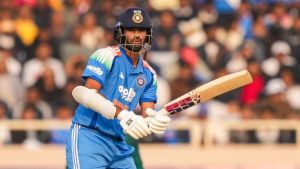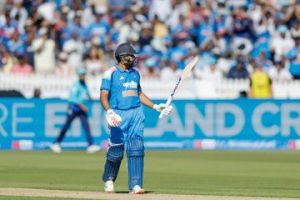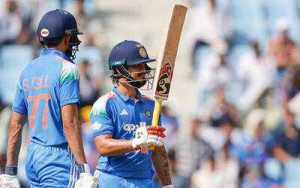
One of the main subjects of discussion prior to India’s three-match ODI series in England was about Rohit Sharma’s patchy form. After two below-par outings in Birmingham and Cardiff, chatter around the former India skipper intensified.
But by Sunday evening at Lord’s, it was evident, rather too starkly, that India had more pressing problems to attend to than worry about the utility of a bona fide great.
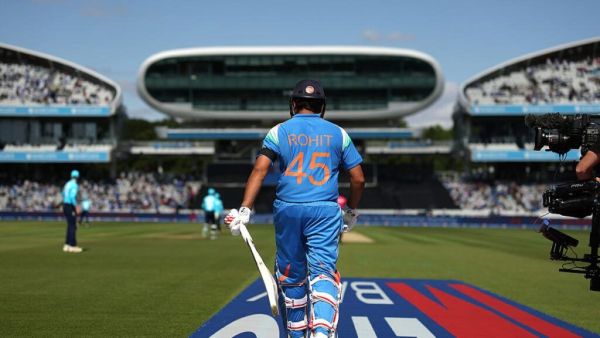
Rohit made a part-meticulous, part-carefree 138 (110b, 17×4, 5×6), his first three-figure score in 12 outings, and later termed the speculation around his future as “noise” that “doesn’t really matter too much”.
ALSO READ | Shubman Gill: In World Cup, we will play 11 matches and here players are unable to complete three games
However, a tepid show by the bowlers and a surfeit of injuries – including to Jasprit Bumrah – meant India fell 28 runs short of the 388-run target and conceded the series 1-2.
It was captain Shubman Gill’s third series defeat since he took over last October, having suffered reverses to Australia and New Zealand earlier.
Gill expressed his displeasure at the fitness standards in the squad as India – apart from Bumrah – did not have Washington Sundar (hamstring injury in Cardiff), Harshit Rana and Varun Chakravarathy (both hamstring, during the T20I series), and all-rounder Nitish Kumar (quadriceps, Afghanistan).
Hardik Pandya was also grounded by a quadriceps injury and did not even board the flight to the British Isles. Gill rightly pointed out that where the ODI World Cup in 2027 requires a player to play double-digit matches, breaking down after two or three games was undesirable.
Ironically, the 26-year-old himself retired hurt at Edgbaston because of cramps, and was again troubled by the issue at Lord’s, calling into question his conditioning.
While fitness concerns can be addressed with a scientific approach, tackling India bowling woes may require a bigger course-correction.
With Bumrah’s brilliance always contingent on his body, India needs experienced hands. But the four pacers who took the field on Sunday – Prasidh Krishna, Arshdeep Singh, Gurnoor Brar and Prince Yadav – had just 55 caps combined, and it showed in the way they struggled when put under pressure by a formidable English batting unit.
Gill, again, admitted to this lacuna, but the think-tank remains bullheaded in its refusal to draft in at least one seasoned practitioner who can help nurture the next generation of quicks.
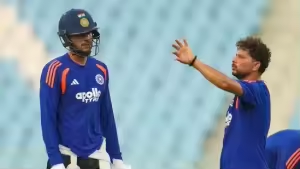
Mohammed Shami, who has 206 wickets from 108 ODIs, has been shunned since the victorious Champions Trophy campaign in March 2025, while Mohammed Siraj – 76 wickets from 50 ODIs – has been in and out of the roster. Wrist spinner Kuldeep Yadav – 194 wickets from 121 ODIs – was a mere passenger for a second straight summer in England.
Gill said Kuldeep’s non-selection for Lord’s was because of how spinners had found very little purchase in the first two fixtures.
His England counterpart Harry Brook stated in his post-match media briefing that it was not surprising to see India line up with four pacers, considering the dominance of speed in the series until then and also because of Bumrah’s injury.
But to forever use conditions, team combination, and the perceived inferior batting prowess as reasons to keep Kuldeep out of the XI are signs of blinkered thinking. Theory will take you only so far.