
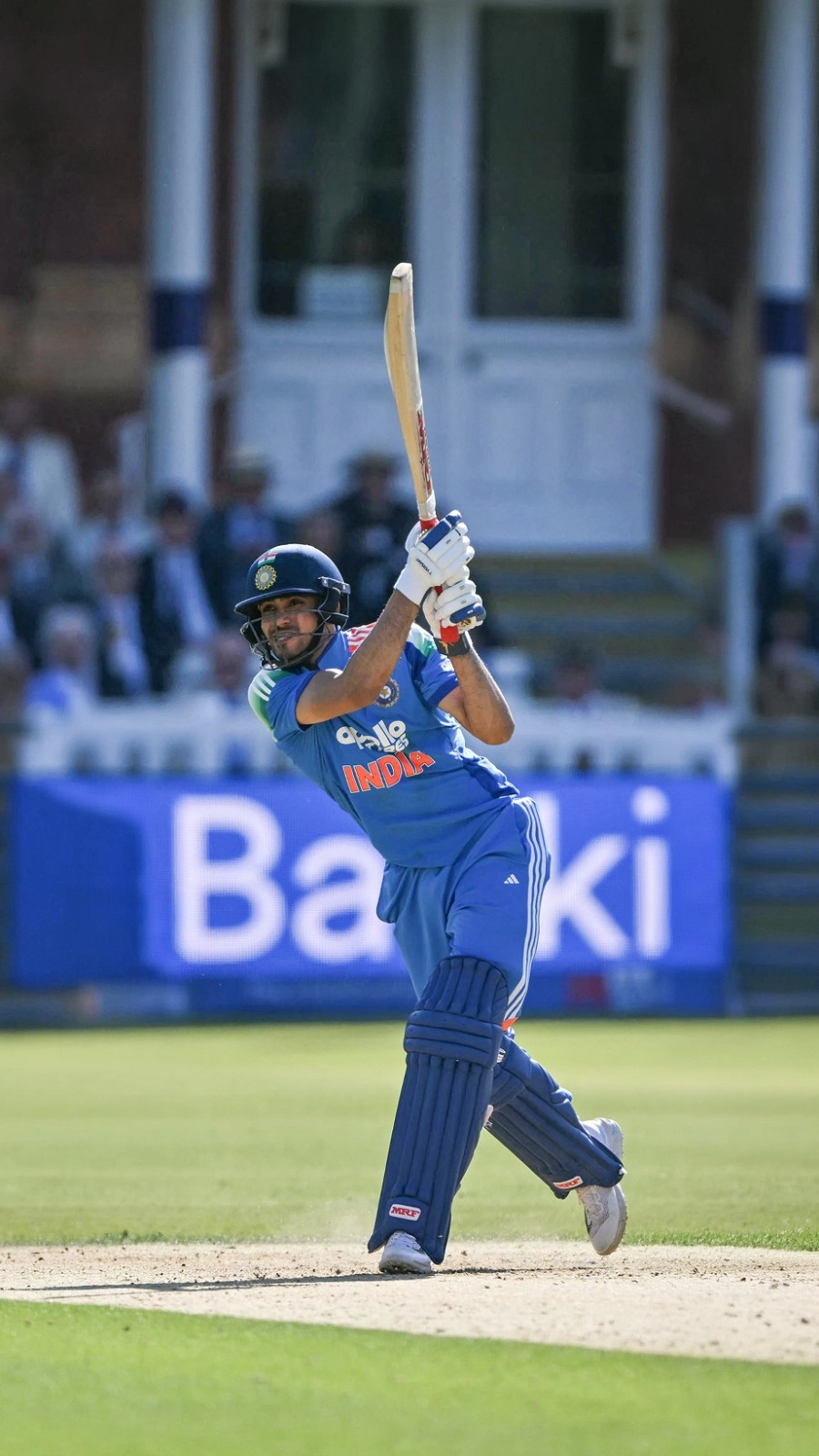
'We need to improve our fitness': Shubman Gill worries whether India stars can last the 2027 ODI World Cup without injuries
Soham Mukherjee
yahoo sports|21-07-2026
Shubman Gill has sounded the alarm on his squad's fitness standards following a wave of injuries that plagued India during their 2-1 ODI series loss to England. The captain voiced serious concern that players couldn't even survive a three-match rubber without breaking down, a worrying sign with the 2027 ODI World Cup on the horizon. India's fitness troubles started even before a ball was bowled in the series. All-rounder Hardik Pandya suffered a quadriceps strain at the BCCI's Centre of Excellence while still recovering from a back issue, forcing selectors to scramble for replacements. His designated replacement, Nitish Kumar Reddy, then went down with a quadriceps injury of his own, while Harshit Rana and Washington Sundar both picked up hamstring problems at different points during the tour. The cruelest blow arrived right before the Lord's decider, when Jasprit Bumrah was ruled unavailable due to an impact injury on his left knee, sustained during the Cardiff match. His absence proved costly, as India's less experienced pace bowlers struggled to control the scoring rate, allowing England to post a mammoth 387-3. Speaking after the Lord's contest, Gill pointed out that at least five players from India's originally announced squad didn't even take the field in the decider. "If you look at the first squad that we announced, at least five of the players did not play today," Gill said. "When one player gets injured, you have to play a different combination. If two are injured, you play a different combination. I think if a player is missing after every match (due to injury), somewhere we are missing a trick."
The captain's concern is rooted in the brutal reality of the 2027 World Cup schedule. Under the ICC's newly announced structure, most teams will need to survive 13 matches to reach the final, while one qualifying side will need 15. If India's squad is already crumbling under the weight of a three-match bilateral series complete with cramps, quad strains, and hamstring pulls piling up one after another, the idea of navigating an entire World Cup campaign injury-free looks genuinely frightening. Gill himself wasn't immune to physical struggles during the series. He retired hurt on 80 in the series opener at Birmingham due to cramping, an issue that resurfaced at Lord's before he eventually fell for 77. Describing the difficulty of managing niggles mid-series, he said, "If one morning you find out that a player has a niggle.
And then it's almost like, 'do you want to take a chance?' Someone is 80 per cent fit, you're playing with five bowlers and if he bowls five overs and goes off the field, then who will you bowl? It is difficult. But somewhere as a group, we need to improve our fitness." Reflecting on the series overall, Gill felt India had put in a fairly solid performance but acknowledged the need to read conditions more astutely. "In both the matches that we have lost, we were in the game for the majority of the game," he said. "And I think it's all about how long we can stay consistently in the game. It almost feels like we are in the game for about 80 per cent of the game." But fitness can't be an afterthought anymore.
Bilateral cricket is supposed to be the easier proving ground before the real test arrives. If bodies are breaking down here, conditioning protocols clearly need urgent rethinking, not cosmetic tweaks. Talent alone won't carry India through 13 matches; durability will decide who's even available to compete when it matters most. For India's team management and selectors, the message is loud and clear: something is seriously missing in the fitness department, and fixing it must become the highest priority before the 2027 World Cup.
The captain's concern is rooted in the brutal reality of the 2027 World Cup schedule. Under the ICC's newly announced structure, most teams will need to survive 13 matches to reach the final, while one qualifying side will need 15. If India's squad is already crumbling under the weight of a three-match bilateral series complete with cramps, quad strains, and hamstring pulls piling up one after another, the idea of navigating an entire World Cup campaign injury-free looks genuinely frightening. Gill himself wasn't immune to physical struggles during the series. He retired hurt on 80 in the series opener at Birmingham due to cramping, an issue that resurfaced at Lord's before he eventually fell for 77. Describing the difficulty of managing niggles mid-series, he said, "If one morning you find out that a player has a niggle.
And then it's almost like, 'do you want to take a chance?' Someone is 80 per cent fit, you're playing with five bowlers and if he bowls five overs and goes off the field, then who will you bowl? It is difficult. But somewhere as a group, we need to improve our fitness." Reflecting on the series overall, Gill felt India had put in a fairly solid performance but acknowledged the need to read conditions more astutely. "In both the matches that we have lost, we were in the game for the majority of the game," he said. "And I think it's all about how long we can stay consistently in the game. It almost feels like we are in the game for about 80 per cent of the game." But fitness can't be an afterthought anymore.
Bilateral cricket is supposed to be the easier proving ground before the real test arrives. If bodies are breaking down here, conditioning protocols clearly need urgent rethinking, not cosmetic tweaks. Talent alone won't carry India through 13 matches; durability will decide who's even available to compete when it matters most. For India's team management and selectors, the message is loud and clear: something is seriously missing in the fitness department, and fixing it must become the highest priority before the 2027 World Cup.
Related News

Latest Newsmore
Ruturaj Gaikwad to lead West Zone in Duleep Trophy 2026
20-Jul-2026 • CricTracker
3 players who should be dropped from India's ODI squad
20-Jul-2026 • CricTracker
‘Wickets were not offering that much to the spinners’: Shubman Gill defends not playing Kuldeep Yadav
20-Jul-2026 • Samira Vishwas

Spain win second FIFA World Cup: How La Roja has built a gold-digging football system
20-Jul-2026 • Samira Vishwas
Ruturaj Gaikwad to Lead West Zone Squad for Duleep Trophy 2026
20-Jul-2026 • Samira Vishwas