
Samira Vishwas
Tezzbuzz|09-07-2026
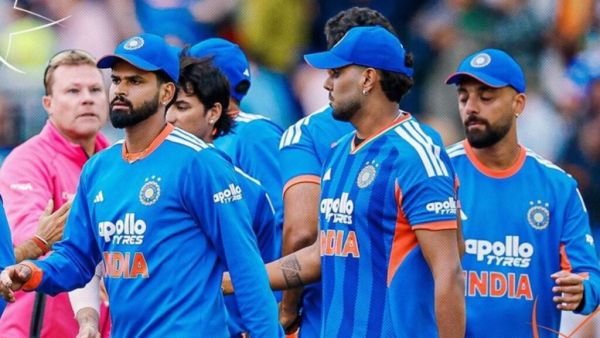
Delhi: After winning the T20 World Cup 2026, Team India was expected to maintain its dominance in the format. However, this did not happen. Consecutive defeats against Ireland and England have raised many serious questions. In the current situation, India’s problem is not just the captaincy or the poor form of any one player, but many weaknesses like team combination, batting strategy and inability to quickly adapt to foreign conditions have come to the fore.
In this article, we will mention the five biggest reasons for Team India’s poor performance in T20 cricket.
1. Lack of balance in the batting order
At present, the number of left-handed batsmen in the batting of the Indian team is more than required. Abhishek Sharma, Vaibhav Suryavanshi, Tilak Verma, Shivam Dubey, Ishan Kishan, Axar Patel and Washington Sundar all bat left-handed.
Due to lack of good coordination between right and left handed batsmen in the top and middle order, the bowlers of the opposing teams do not have to make much changes in their line-length and fielding. Bowlers are getting permission to bowl at the same angle continuously, which is costing India heavily.
2. Foreign conditions exposed technical weaknesses
In the last one and a half years, the Indian team has played most of its cricket in the conditions of the Indian subcontinent. Recently, the T20 World Cup also took place on Asian pitches, while soon after that the IPL was also played in India. On these pitches, batsmen do not have to face much swing and seam movement.
But as soon as they reached Ireland and England, Indian batsmen were seen struggling against the swing, extra bounce and seam movement of the new ball. Due to the big grounds of England, many shots which are easily hit in IPL are turning into catches instead of crossing the boundary.
3. England’s short ball strategy was completely successful
In the ENG vs IND series, England’s fast bowlers have caught India’s biggest weakness. Jofra Archer and Josh Tong have been successful in putting the Indian batsmen on the back foot by continuously bowling fast short balls towards the body and accurate yorkers.
Batsmen like Vaibhav Suryavanshi, Abhishek Sharma and Ishan Kishan were seen losing their wickets while trying to play pull or hook shots on short balls. Not only this, the Indian middle order has also shown discomfort against short balls for a long time, of which the opposing teams are taking full advantage.
4. Overconfidence on all-rounders
Team India has been fielding many all-rounders in the playing-11 for some time now, but the problem is that these players are not able to contribute equally with both bat and ball.
Shivam Dubey and Abhishek Sharma are mainly used as batsmen and are made to bowl very rarely. On the other hand, Axar Patel and Washington Sundar are effective in bowling, but their contribution in batting remains limited. In such a situation, if needed, instead of filling many all-rounders, going with five specialist bowlers can be a better option.
5. IPL success is not working in international cricket
IPL has definitely given Indian batsmen the habit of playing aggressive cricket, but the challenges of international cricket are completely different. In India, batting-friendly pitches, small boundaries and impact player rules allow batsmen to play freely.
On the contrary, in places like England and Ireland, just hitting big shots does not work. In such challenging conditions, patience, strong technique, ability to rotate the strike and batting according to the match conditions are necessary, for which this young batting order does not seem to be fully prepared yet.
FAQ
What is the biggest reason for Team India’s poor performance in T20 cricket?
There is no balance between right and left handed batsmen in India’s batting. This makes it easier for the opposing bowlers to adopt the same strategy.
Why are Indian batsmen struggling in overseas conditions?
There is more swing, seam movement and extra bounce on the pitches of England and Ireland. Indian batsmen are not able to adapt themselves quickly to these conditions.





India slump to record 125-run loss in 3rd T20I; what went wrong?

After winning the series from Sri Lanka, West Indies were fined heavily and deducted 2 WTC points, know the reason
IND vs ENG, 4th T20I: What is Indian cricket team’s T20I record in Bristol?

Kapil Dev's Classy Response To Yograj Singh's Controversial Claims