
Sandy Verma
Tezzbuzz|25-03-2026
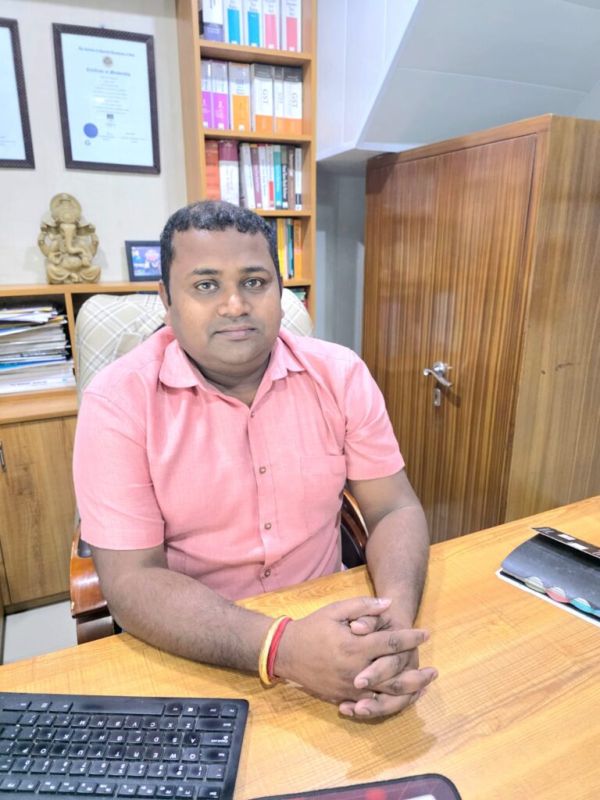
CA Rajeev Kumar
B.Com (Hons), FCA, LL.B
Founder & Managing Partner – Tax Sanjivani
Fellow Chartered Accountant | Member of ICAI Over 15 Years of Experience
Con : 9650989444, Email : Rajeev@fcarajeev.com
Central Board of Direct Taxes (CBDT) on 20 March 2026 income tax Rule2026 have been notified, which will be effective from 1 April 2026 (tax year 2026-27 / assessment year 2027-28). These rules are new income tax Act2025 which will replace the 64-year-old Income Tax Act 1961 and Rules 1962. The new rules reduce the number of rules from 511 to 333, simplify the language, focus on digital compliance and aim to reduce litigation.
There is no change in tax slabs and rates. The new tax regime remains the default, with zero tax up to ₹12 lakh (effective zero tax up to ₹12.75 lakh after ₹75,000 standard deduction for salaried people). Exemptions like 80C, HRA are available in the old system. The main benefits are coming from procedural changes — exemption limits for allowances have increased, perquisite assessments have been updated and compliance has been simplified.
salaried employees Of For elder advantages: : More Discount And Easy Claim
These rules are most beneficial for salaried taxpayers, especially those choosing the old tax regime. The limits of allowances and perquisites have been increased keeping in mind inflation and market realities.
HRA Discount In Big Expansion Most significant changes: Four new tech hub cities — Bengaluru, Pune, Hyderabad And Ahmedabad — has been included in the 50% HRA exemption list. Now a total of eight cities (Mumbai, Delhi, Kolkata, Chennai, Bengaluru, Pune, Hyderabad, Ahmedabad) are eligible for 50% discount, while 40% for the rest. The formula for HRA exemption remains the same – HRA received, amount left in rent less 10% of salary, or 50%/40% of salary – lower of the above. Example: A person with an annual salary of ₹15 lakh and a monthly rent of ₹60,000 in Bengaluru can now save an additional ₹1-1.5 lakh in tax than before. New rule: If the total rent is more than ₹1 lakh, it is mandatory to mention the name, PAN, address and relationship of the landlord in Form No. 124. This will stop fake claims, but digital form will make work easier.
Specific perks In Heavy increase The exemption limits under Schedule III have been significantly increased:
- children of Education allowance: ₹100 per month per child increasing to ₹3,000 per month (maximum two children).
- hostel Expense allowance: Increase from ₹300 to ₹9,000 per month per child. Families with two school-going children can now avail tax-free exemption of up to ₹72,000 (education) + ₹2.16 lakh (hostel) annually — a big relief for middle-class parents.
- transportation allowance (Especially for disabled employees): ₹15,000 + DA in Metro, ₹8,000 + DA elsewhere.
- free Meal/miles card: Tax-free up to ₹200 per meal (earlier ₹50). Office canteen or vouchers now more attractive.
- non–cash gift/coupon: Tax-free up to ₹15,000 annually (first ₹5,000).
These changes match current costs and provide real tax savings to employer-provided benefits.
perquisite Evaluation In Improvement Table updated under Rule 15:
- Company Car: Taxable value as per market price (₹5,000-₹7,000 monthly depending on engine size + extra for driver; nil on government use). Slightly higher tax on luxury cars, but possible savings from official usage records.
- Concessional Loan: Nil perquisite up to ₹2 lakh total outstanding (additional waiver on diseases like cancer, TB).
- Foreign medical treatment: Exemption limit increased to salary ₹8 lakh.
₹75,000 Standard deduction (new regime) and simplified form Number 130 (TDS Certificate) filing has become faster. Salaried people opting for the old regime can now save an additional ₹50,000 to ₹2 lakh+ annually, especially in new HRA cities or families with children. Experts say the old system has now become more competitive in cases with high discounts.
businessmen And Pros Of For streamlined Benefit
Self-employed professionals, small businessmen and estimated taxpayers benefit from digitalization and looser borders.
- digital record maintenance: Books now in digital form (e-Rupee/CBDC accepted). This will reduce documentary disputes.
- pan Citation of Limit increased: Threshold higher for many transactions — like immovable property above ₹20 lakh, vehicle ₹5 lakh, hotel cash payment ₹1 lakh. Asset SFT reporting limit ₹45 lakh. PAN requirement less for small transactions.
- simplified ITR form: ITR-4 (Sugam) and Estimated Schemes Easy. Turnover up to ₹75 lakh (more in some cases) Filing without attachments.
Small businesses will save time and compliance costs. Overall, Rule 333 and auto-fill forms will reduce errors and fines.
companies Of For clear (But hard) compliance
Companies benefit from reduced litigation and standardized processes, although reporting has strengthened.
dividend Rule Easy Keeping share register in India, holding AGM in the country and dividends paid only in India — foreign investors and companies will get certainty.
stock exchange Recognition hard 7-year audit trail for derivatives trading, prohibition on deleting transactions and monthly form Number 1 Reporting of client code changes. This will benefit transparent companies and prevent manipulation.
Other facilities
- TDS/TCS Certificate made easy with 150+ new forms (pre-filled).
- Auditor to check foreign tax credit, PAN linkage — fewer surprises in assessment.
- Low/Zero TDS Certificate easily from digital portal.
Large companies will benefit from the predictability of dividend and exchange rules, even with increased reporting. With the new Act, the sections have been reduced from 819 to 536 and the words have been halved.
conclusion: : Modern And taxpayer–Friendly shift
The Income Tax Rules 2026 focus on procedural and compliance reforms. Salaries save thousands of rupees through inflation-adjusted rebates (eight cities, family allowances in HRA); Digital simplicity and higher limits for businesses; Regulatory clarity for companies. No retroactive effect — only forward modernization.
Advice to taxpayers: Review the salary structure (old vs new system) and update the new forms before April 1, 2026. Get latest information on the official e-filing portal. The effective tax burden for most people will be lower and paperwork will be reduced – a welcome step towards “Ease of Doing Business” and “Ease of Living”. Consult a tax advisor for personal effects.






'No Way He's Out Of The Picture': Key Backs Livingstone Amid Criticism

IPL 2026: Rinku Singh promoted after failing miserably in T20 World Cup, becomes vice-captain

This star player will be banned from IPL, action will be taken for breaking BCCI rules, captain has also been punished

India women’s team announced, Anushka Sharma got her first chance for South Africa tour