
Sandy Verma
Tezzbuzz|18-03-2026
France’s Agency for Food, Environmental and Occupational Safety and Health (ANSES) recently released the results of a detailed scientific study showing that the health risks from vaping are significantly lower than those from traditional cigarettes. However, it is not that it does not cause any harm to health. The findings come from a review of more than 2,500 studies that examined the toxicological effects of vaping.
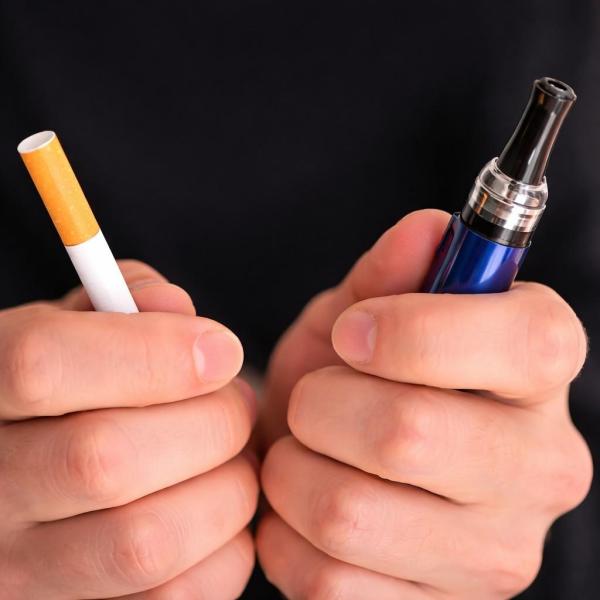
The agency said that the main difference between vaping and cigarettes is that tobacco is not burned in it. Traditional cigarettes burn tobacco, releasing large amounts of toxic and carcinogenic compounds. At the same time, in e-cigarette, a liquid is heated, due to which aerosols are formed. These aerosols contain very few harmful substances and that too in very small quantities.
The report revealed that 98 percent of adults vaping in France currently or have previously smoked cigarettes. 61 percent of these people use both together. Daily vaping is only 6.1 percent, and daily cigarette use has fallen to 18.2 percent, the lowest level since the 1990s. These data support the view that vaping has primarily been a harm reduction tool for cigarette smokers, not a recreational vehicle for non-smokers.
Jonathan Livingstone – Banks, PhD, Lecturer and Senior Researcher, Evidence-Based Healthcare, University of Oxford, said: “Our research provides very strong evidence that e-cigarettes are an effective way to help people quit cigarettes. E-cigarettes are not completely safe, but it can be said with confidence that they are much safer than cigarettes.
These findings from the Agency for Food, Environmental and Occupational Safety and Health (ANSES) study provide important scientific information for policymakers and health professionals to evaluate the role of alternative nicotine delivery systems in India, where cigarette smoking- diseases remain a major public health problem. However, the safest option is to quit smoking completely. But for those who are not able to quit, evidence shows that regulated e-cigarettes expose them to fewer harmful chemicals than traditional cigarettes. E-cigarettes offer a limited and temporary way to reduce exposure to toxic substances for adults who smoke cigarettes, but it requires that e-cigarettes be used responsibly for the purpose of quitting traditional cigarettes.
The Agency for Food, Environmental and Occupational Safety and Health (ANSES) also stressed that while vaping is less harmful than traditional cigarettes, there is little evidence of long-term effects of continued use of e-cigarettes. Therefore, the risks of vaping are rated as “possible” or “probable”, while the risks of smoking traditional cigarettes are much higher, as has been proven.
ANSES also said that people who do not smoke cigarettes should not start vaping. However, for those who are unable to quit their cigarette habit, e-cigarettes may provide a temporary harm reduction option that is most effective when used in a planned way to quit both cigarettes and vaping. The agency also directed that these findings apply only to regulated devices and liquids that are sold through authorized channels. Unregulated or illegal products may contain hidden additives, high amounts of nicotine or harmful ingredients, which can pose significant health risks.






Suryakumar Yadav credits four individuals for his promotion to T20I captain ahead of Hardik Pandya

“Ravindra Jadeja at No. 4, no Sam Curran”: Suresh Raina predicts Rajasthan Royals’ playing XI for IPL 2026

Suryakumar apologised to Mitchell to set example

Virat Kohli will again become number 1, steps are taken in India for IPL 2026