
Sandy Verma
Tezzbuzz|16-03-2026
Now ‘British’ entry in plywood factory dispute, former Municipal President wrote a letter to the High Commissioner
Help sought from British High Commission to search for heirs of Henry Thomson, will government action stop?
The future of 150 bighas of land and thousands of laborers is at stake, Ashish Mishra said – ‘Protecting rights is necessary’
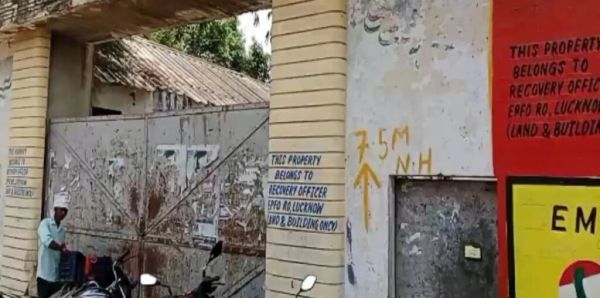
Sitapur. The case of Plywood Products Factory (Henry Thomson Plywood Products), once the pride of Asia, located in Hussainganj locality of the city, has now reached the international corridors. Amidst the administrative exercise to register the precious 150 bigha land of the factory in the revenue of the state government, former Municipal President and senior advocate Ashish Mishra has played a big bet. He has written a formal letter to Miss Lindy Cameron, British High Commissioner to India, demanding to trace the heirs of the original British owners of this historic property.
Asia’s giant factory and 25 years of silence
Established in 1939 by British citizen Mr. Henry Thomson and his sisters, this factory was once known for its quality at the Asia level. The plywood here was exported from Australia to Nepal and more than 1,000 employees worked in three shifts. The factory has been closed for nearly 25 years after the British owners left India in 1987. Recently, on 11 February 2026, District Magistrate Dr. Rajaganapati R. had started the process of acquiring this land in favor of the State Government by issuing a public notice, for which 30 days time was given.
Kanpur’s objection and the problem of British heirs
Advocate Ashish Mishra, in his letter, has requested the British High Commission to trace the legal heirs of Henry Thomson through its records and databases. He has argued that any “coercive” action by the Uttar Pradesh government should be stopped until the rightful British heirs are identified. According to Ashish Mishra, some people of Kanpur have claimed this property, but the original ownership has been of British citizens only.
Concern about workers’ rights and employment
In the letter, Ashish Mishra has raised the issue of not only the property but also the welfare of thousands of former Indian employees who were associated with this factory. He believes that if the factory is revived with proper ownership, there will be massive employment generation in Sitapur and the city will regain its lost industrial glory. Now it remains to be seen what stand the British High Commission takes on this letter and whether the district administration reins in its action after this new objection.






Bulandshahr: Anil Mavi murder accused declared fugitive, property will be auctioned if he does not surrender

Harbhajan Singh selects Mumbai Indians’ preferred overseas quartet for IPL 2026

Senior Women’s Inter-Zonal One-Day Trophy: Radha Yadav, Shweta Mane lead West Zone to title

'The boys used to get jealous' - Sanju Samson shares interesting insights on Abhishek Sharma's meteoric rise