

Sanjeev Kumar
khelja|14-03-2026
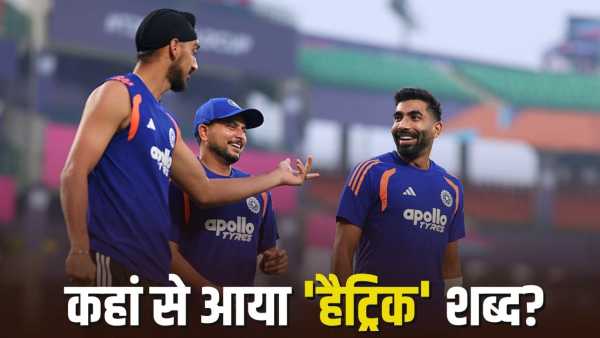
History of Hat-Trick in Cricket: Taking a hat-trick in cricket is considered very difficult, because to take wickets on three consecutive balls, the bowler not only needs skill, but also has to remain calm under pressure. Till now, hundreds of hat-tricks have been taken in international cricket in Test, ODI and T20, but each one is memorable. But why is taking 3 consecutive wickets in 3 balls called a hat-trick in cricket? This question comes to the mind of every cricket fan sometime or the other. After all, what does the word 'hat-trick' have to do with cricket? Come, let us know its complete story.
Where did the word 'hat-trick' come from in cricket?
The word 'hat-trick' originated from England in the 19th century. In fact, in a match in the year 1858, a bowler named Heathfield Harmon Stephenson had made a lot of headlines. Stephenson bowled fast roundarm with his right hand, batted with his right hand and sometimes kept wickets as well. Playing for the All England team at the Hyde Park ground in Sheffield, he took three wickets in three consecutive balls against the team of Hallam and Staveley. This achievement was so unique and spectacular at that time that fans and teammates decided to especially honor it.
Due to which, after the match, the fans made a collection in the ground and bought a new hat with that money. This cap was gifted to Stephenson as a respect. That is, the bowler who took three consecutive wickets got a 'hat' and the fans called this feat a trick. From this, the tradition of calling this achievement 'hat-trick' started. At the same time, in 1878-79, when Fred Spofforth took the first hat-trick in Test cricket, the word 'hat-trick' was used in print for the first time in newspapers. Since then this word became part of the language of cricket.
The word 'hat-trick' is also used in other sports
Today, hat-trick is not limited to cricket only. In hockey, football and other sports too, three goals or three successes is called a hat-trick, but its roots are in cricket itself. So the next time a bowler takes a hat-trick, remember that it is not just three wickets, but a celebration of the old tradition of 1858, where a great performance was rewarded with a hat-trick.

Will RCB break the overseas auction curse and defend their title in IPL 2026?
Aakash Chopra picks his ideal playing XI of Sunrisers Hyderabad (SRH) for IPL 2026

Deepti Sharma wins Sportswoman of the Year award at Sportstar Aces 2026

IPL 2026: 4 players who could emerge as surprise openers