

Sandy Verma
Tezzbuzz|13-03-2026
Michael Vaughan said something on the Stick to Cricket podcast after the 2026 T20 World Cup that got people talking and divided opinion almost immediately.
The former English captain called South Africa the stupidest team of the tournament. Not because they played badly. Not because they choked against New Zealand in the semi-final, but because they won a game that he believes they should have lost on purpose.
It is the kind of take that sounds smart in a podcast conversation and starts falling apart the moment you actually look at the numbers, the history, and the team South Africa would have needed to beat to make the plan work.
Vaughan is not wrong that South Africa’s win over West Indies opened the door for India. He is just wrong about what South Africa should have done about it. This is why the argument works on paper and why it would have been a disaster in practice.
What Michael Vaughan said and why the logic makes sense at first glance
South Africa beat India by 76 runs in the Super 8s. It was a dominant performance and it left India with a terrible net run rate and a qualification path that depended heavily on other results going their way. A few days later South Africa played West Indies and this is where Michael Vaughan’s argument begins.
He laid it out plainly on the podcast. “I tell you what I think is the stupidest team of the tournament. South Africa. I’ll tell you why. If South Africa had allowed the West Indies to beat them in the Super 8s, India would have been knocked out.”
His co-host Phil Tufnell pushed back immediately, pointing out that deliberately losing is not allowed, to which Vaughan responded, “No, but I’m just talking. If they’d have just cleared them out, the juggernaut that was coming, by winning that game, they allowed the juggernaut to go. We’ll beat Zimbabwe, we’ll beat the West Indies in a quarter-final, and then we’ll beat England.”
The logic is not without merit on the surface. South Africa had already beaten India. West Indies had beaten Zimbabwe comfortably. If South Africa had lost to West Indies, the standings would have shifted in a way that made India’s qualification almost impossible regardless of what they did in their remaining games.
Instead, South Africa hammered West Indies by nine wickets, straightened out the net run rate situation for India, and gave the eventual champions a clear path to the knockouts. India beat Zimbabwe, beat West Indies in what became a virtual quarter-final, beat England in the semi-final and then crushed New Zealand by 96 runs in the final.
The team South Africa made room for won the whole tournament. Vaughan’s frustration is understandable but his solution is a different matter entirely.
Why the plan would have blown up in South Africa’s face
Michael Vaughan’s theory rests on one assumption that does not hold up under scrutiny. That South Africa would have comfortably beaten Zimbabwe in a must-win game. Alastair Cook raised this point on the same podcast, and it is the most important part of the entire conversation.
“South Africa had to play Zimbabwe next,” Cook noted, acknowledging the flaw in the plan. And this is where South Africa’s history becomes the most relevant thing in the discussion.
Four years ago South Africa only needed to beat Netherlands to reach the semi-finals of the T20 World Cup 2022. They lost by 13 runs and went home. In the ODI World Cup 2023, they were the most dominant team of the entire tournament until they walked into a rain-shortened game against Netherlands in Dharamshala and lost by 38 runs. Two must-win games against lower-ranked teams. Two losses.
For South Africa there is genuinely no such thing as a guaranteed win when the pressure is at its highest and the opponent has nothing to lose. Michael Vaughan is asking them to deliberately create exactly that scenario against a Zimbabwe side that had already beaten Australia and Sri Lanka in the group stages of this very tournament. Sikandar Raza was playing some of the best cricket of his career. A South Africa team carrying the mental weight of having just thrown a game, walking into a knockout situation against an in-form Zimbabwe, would have been in serious trouble.
The verdict on Michael Vaughan’s take and what South Africa actually did right
There is a version of this argument where Michael Vaughan is making a broader point about tournament strategy and the ruthlessness required to win a World Cup. “If you want to win a World Cup, get rid of the best team early,” he said, and as a philosophy, that is not entirely wrong.
The best teams in the world do think about these things. But thinking about tournament dynamics and deliberately losing a game are two very different things and the line between smart cricket and match manipulation is not one any team should be stepping near regardless of the prize.
South Africa played every game to win. They went into the semi-finals as the only unbeaten team in the tournament. They lost a fair contest to New Zealand, who were brilliant on the day, with Finn Allen’s 33-ball century setting up a 9-wicket win that nobody saw coming. That is not stupidity. That is sport.
If South Africa had followed Vaughan’s advice, lost to West Indies, then slipped up against Zimbabwe the way their history says is entirely possible, they would have been knocked out in the Super 8s, having thrown away the best position any team held in the entire tournament. Nobody would have been calling them clever.
Vaughan’s take makes for a great podcast moment. As actual advice for a cricket team, it would have been the genuinely stupid decision he thinks they already made.






WI Name Unchanged Squad For Women's T20Is Against Australia

ICC Suspends West Indies Cricketer Over Alleged Corruption In Bim10 League
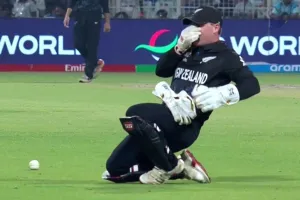
Tim Seifert Struck on Face While Wicketkeeping in NZ vs SA T20 World Cup 2026 Semifinal

The Hundred Auction 2026: Full Squads Of All 8 Teams