India’s recent white-ball domination has reflected in titles, but the side’s foundation goes beyond just wins. Behind the scenes, it has been shaped by clarity of roles, quiet technical nudges and a dressing-room culture that places collective goals above individual acclaim.
Batting coach Sitanshu Kotak has played a key role in building that environment.
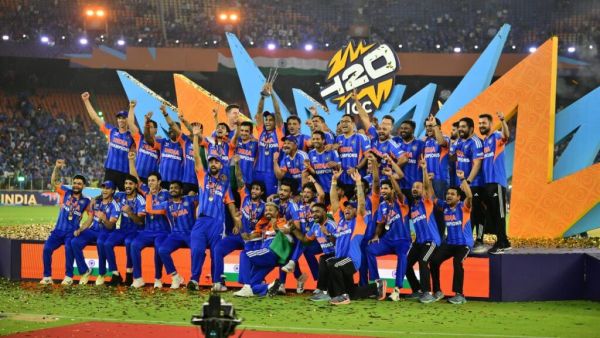
After India created history, becoming the first team ever to defend the T20 World Cup title, Kotak gave insights into India’s campaign, the tactical thinking that guided the batting unit and the influence of Gautam Gambhir and skipper Suryakumar Yadav on the team.
ALSO READ | T20 World Cup 2026: Jasprit Bumrah, keeper of India’s nerve
Speaking to Sportstar from his home in Rajkot on Tuesday, Kotak reflected on why partnerships and trust became the bedrock of the side’s success, and looks ahead to India’s quest for a place in the ICC World Test Championship final.
Q. There were early troubles for the team as some of the batters looked out of sorts. But things changed as the tournament progressed. What are your reflections on India’s T20 World Cup campaign?
A. During the tournament, I attended a couple of press conferences where I faced questions on Sanju Samson’s initial dry patch, Abhishek Sharma not being able to score in the first few games as per people’s expectations, and many felt that even Tilak Varma played a couple of slow innings. So those questions were always raised, but I knew the way they bat and the class they have is amazing.
Before this T20 World Cup, in all the bilateral series, we had created amazing momentum in batting. I felt that just in a couple of games early on we lacked that momentum. But in a long tournament, such things happen. The only concern for us was that it shouldn’t happen at the wrong time. The idea was to keep the environment buzzing, keep everyone confident, and keep driving them into that fearless mode.
We also knew that being fearless won’t always work. Sometimes we had some brilliant plans, with Surya and Gautam being on the same page. Our observation was that it was okay to lose two wickets in the PowerPlay because we could still bounce back. But if we lost a third or a fourth wicket, we struggled despite having enough depth in the batting unit. That’s something we wanted to avoid.
“I always told the batting unit that if only two guys perform, then you cannot become a champion because they will eventually fail at some point. So, the idea was to ensure that out of eight batters, three or four stand up and perform.”Sitanshu Kotak
We decided that if we lose two quick wickets in the Powerplay, we will not rush. We will play cautiously for the next eight to ten balls and play less risk-percentage shots, because that would allow us to build a new partnership. As soon as those eight to ten balls were over, we again went back to our aggressive style of play.
Gautam and Surya were focusing a lot on the left-right combination and match-ups, and throughout the campaign all of us were on the same page and backed each and every player. We were clear in our approach that no bowler or batter should feel left out. Even when some of them were not in the playing eleven, we ensured that they remained positive.
It was a unique situation. While the best eleven were playing, our plan allowed the others to remain confident.
For instance, when Sanju was not playing, he was still confident. I spoke to him that every other day things change, there could be injuries or poor form, and that he had to be prepared. And he used to say, ‘Kotak bhai, aap chinta mat karo, main always prepared hoon, jab aap kahoge main kar dunga (Don’t worry, I am always prepared. Whenever you tell me to go and perform, I will do it).’
So all that actually came true. That was great.
Q. As a batting coach, how did you approach technical and tactical inputs during such a high-pressure tournament?
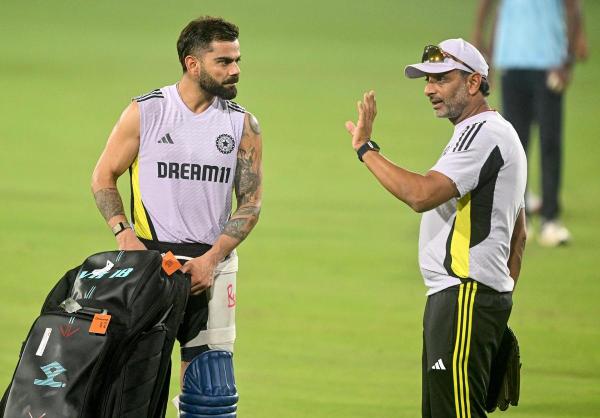
A. We, technically and tactically, support them and also try to boost their confidence. Whatever minor points, even some important points, we have, we try to pass them on in a very subtle way. That is how I operate. I feel that if we have to say anything during this kind of a tournament, it has to be very subtle, because I don’t want to put any doubts in any batter’s mind.
Sometimes we know that bowlers are bowling outside the off-stump line to Ishan Kishan, or bowling to Abhishek Sharma with deep point or deep extra-cover with a certain line and length. He also knows this, but the question is how you put it across to him and find a solution. In a high-pressure situation like this, the process has to be very subtle. That’s exactly what we did.
At this level, if you make it very obvious, go to the nets and tell the player that I am throwing and you play a cut, then the players will start thinking in one direction and start doubting themselves.
My coaching philosophy says that anything I say shouldn’t bring any doubt to any batter’s mind because they already know what to do. I don’t want to harp on that. My job is to give them direction so that they can realise where they are going wrong and choose the correct path.
Q. How much did Gambhir contribute in shaping batting ideas?
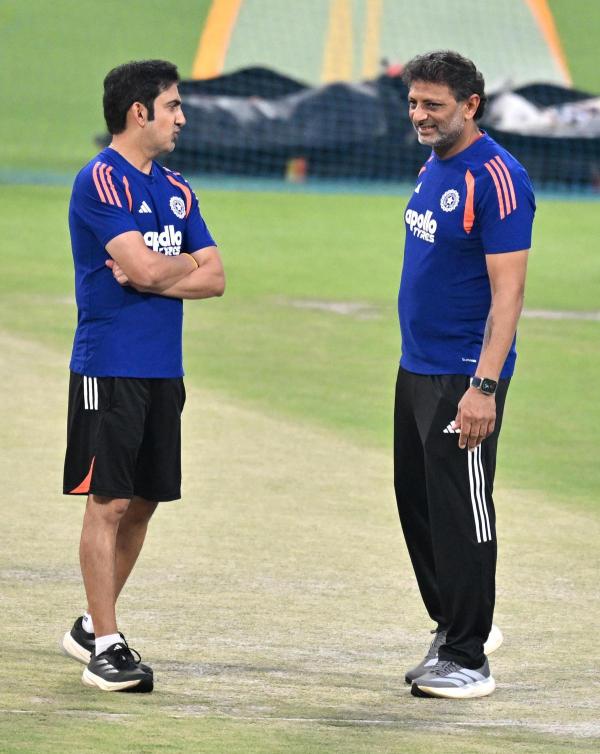
A. Gautam, being such a great batter himself, also stressed on using the crease better. For example, standing on off stump instead of leg stump. It sounds like a simple adjustment, but it actually covers an extra foot.
We spoke a lot about using the depth of the crease against England in the semifinal. The slower balls were troubling batters, so we discussed stepping out, using the crease and exploring different options.
Those are the things we prepare for, but we always try to keep the environment such that it never feels forced on the players.
In this tournament too, we did the same thing. Not for once did anyone feel that we were trying to impose anything on them. Throughout the tournament, I allowed the boys to play freely, and the only thing I told them was that if we lose three or four wickets early on, it will be tough to bounce back because we knew that the wickets were very good and teams could easily score 200-plus runs.
Q. Partnerships became a major talking point in India’s batting approach. How important were they?
A. Yes, that was another crucial factor. In Tests and ODIs, people stress a lot on partnerships, but that’s important in T20Is too.
In the semifinal and the final of the T20 World Cup, we could score 250-plus runs because of these 35, 40, 45-run partnerships. They were small partnerships, but they gave the team a huge boost as it breached the 250-run mark.
Sanju kept batting in the semifinal and kept the team’s motto intact that the team’s interests are bigger than individual milestones. That was evident from the fact that despite being close to a hundred, he did not push for it.
ALSO READ | Fearless and formidable: India strengthens supremacy with third T20 World Cup title
I told Sanju, ‘ Ek toh hundred karna hai’ (you have to score one hundred). He replied with a smile: ‘On one hand you say it’s not about personal milestones, and on another you say score a hundred. How are two things possible?’
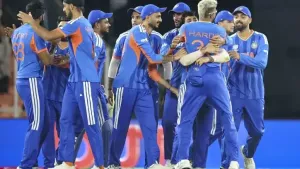
Obviously, he was joking, but it spoke volumes about the mindset of the team. Players never thought about their personal runs and always put the team first. That made the difference.
Q. You consistently backed players—Samson and Abhishek in particular—despite lean patches. How important was that?
A. When a player has three or four failures, especially in T20s where expectations are very high, it’s not easy to bounce back. Abhishek was no exception.
When you open the innings, people expect you to score 70 or 80. But when you know you have not scored runs in the last few games, it is tough on a player. That’s why I say a lot of credit should go to the players. We try to help them, but ultimately we are only a support system. At the end of the day, it is the player who goes out and executes the plans.
I always told the batting unit that if only two guys perform throughout, then you cannot become a champion because they will eventually fail at some point. So the idea was to ensure that out of eight batters, three or four should stand up and perform. That was our thinking. It didn’t matter who was scoring the runs or who wasn’t. It was about clicking as a batting unit.
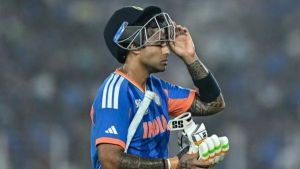
There were occasions when Shivam Dube and Hardik Pandya contributed. At times it was Abhishek or Surya and the job was done. Abhishek was always an important part of our team. We never doubted his ability. We knew there would be times when bowlers would come hard at him and bowl in certain areas.
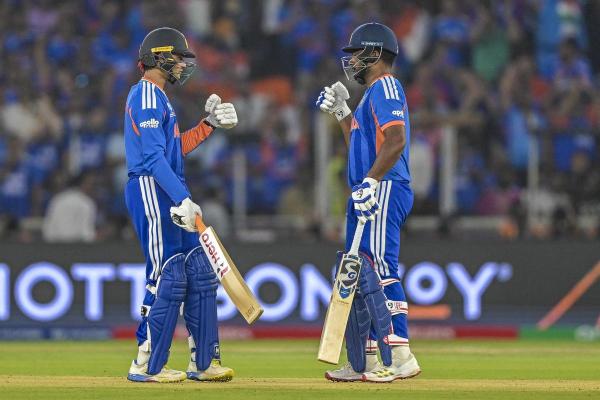
In between, he was trying to hit the ball too hard after three or four failures. So we made him realise that his strength was timing and not muscling the ball out of the park, unlike Dube or Hardik. We tried bringing back his normal bat swing, worked on his timing and he did that against Zimbabwe and scored a fifty. We never put any added pressure on him, and he did it again in the final.
It was the same with Sanju. After the initial failures, we worked a bit on his technique. It was a small adjustment in his initial movement and working on his base. He kept working on it and got the results. Sanju has been brilliant. He is leadership material and he knows how to handle pressure. He is so confident. His last three innings were unreal.
Ishan Kishan was brilliant. He batted at a strike rate of about 200, but not for once did it look as if he was slogging. Tilak was flexible with his batting slot because we knew that he could finish the game. Whenever we wanted partnerships, especially in Colombo, Tilak made sure he did his job perfectly.
Q. There was criticism after India’s Super Eight defeat against South Africa. How did you view that phase?
We thought it was a bad game. As a batting coach, I knew that we couldn’t do worse than this. I was not worried. I was happy that it was not a knockout game.
It happened at a time where we could bounce back. My theory was simple: we won four, lost one, and will win the remaining four. By God’s grace, that’s what happened.
Q. As batting coach across formats, how do you deal with the pressure?
A. There’s a lot of pressure, for sure. But in red-ball cricket also, our team is brilliant. I think that one game against South Africa at Kolkata that we lost, obviously Shubman’s injury was one of the factors, it was correct that we did not play well. We have to accept it.
Our players are also human. They can also have a bad outing. Then in the next game we lost the toss and things didn’t go our way. So it was tough to digest that we could lose two Test matches like that. But going forward, I am confident that we will keep fighting and we will find a way to get to the World Test Championship final. I am a strong believer that we can execute our plans and achieve our goal.
Pressure is there in T20s and ODIs also, because all other teams are good. But the BCCI also deserves a lot of credit. With such a vast domestic season, we have a huge pool of talent and that’s why people often feel that India can field two or three teams simultaneously. The way the BCCI conducts the cricket calendar is unreal. I don’t think that is possible anywhere else in the world.
The credit goes to Jay bhai (former secretary, Jay Shah) and all the administrators who are silently doing so much for Indian cricket. The number of matches we play here is incredible. Players earn a lot of money, which also gives them a sense of security. And that’s why we are dominating.
Q. Suryakumar’s form was debated about during the tournament. How did you see it?
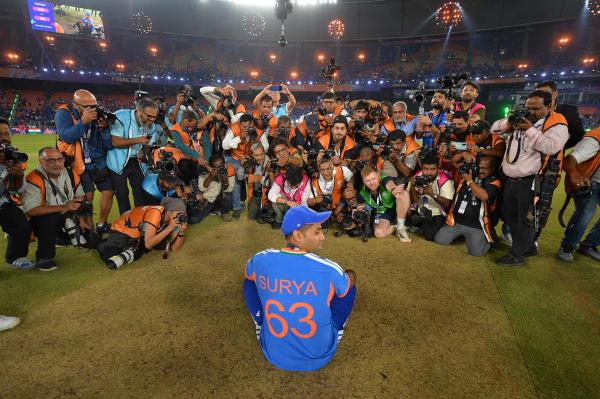
A. He did not worry about his batting. He did what the team needed. Surya let Hardik go early in the final. He did the same in the semifinal where Dube went before him. He is the best T20 player in the world, but still he was ready to do anything for the team. That’s one of the reasons why the team did well.
The batting unit had that belief and everyone was ready for any sacrifice and kept the team first. That really worked well for us. Gautam also lets Surya take the final call and he has done an incredible job. The only thing he told the team was: ‘We have to win the World Cup and I will do anything to clinch it.’ Everyone listened to him and did their job.
I wouldn’t say that Surya was out of form. In T20s, when you are the captain and the job is to guide the team to victory, there are times when you feel you could have played a few more big innings, but the captain knows that winning is the priority. It did not matter who scored the runs. His form is never a concern for me.
Q. Was there a defining moment that changed India’s campaign?
A. In the first game against the USA, we were six wickets down before Surya played that innings and guided the team to a win. I told myself that this is the start. We were always prepared to score 200 on any day, but the first game warned us that anything could happen.
Even when we lost to South Africa, it came as a wake-up call. That helped us plan in such a way that we were never in that tricky situation again. So, we were very well prepared for the semifinal and the final.
Credit goes to all the 15 players. Even seniors like Mohammed Siraj and Kuldeep Yadav had to warm the bench, but whenever they got a chance they made it count. Even Rinku Singh was ready for any challenge despite a personal tragedy. This mindset spoke volumes about the team and they always stood up as one united side.