
Samira Vishwas
Tezzbuzz|09-03-2026
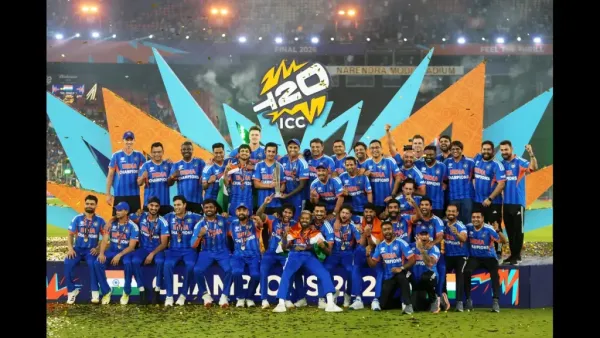
India produced a performance for the ages in the 2026 ICC Men’s T20 World Cup final, dismantling New Zealand by 96 runs in a one sided contest that showcased the sheer depth and power of the current Indian setup. Batting first in the final, India piled on a massive 255 on the board, powered by Sanju Samson’s sublime 89 and explosive half centuries from Abhishek Sharma and Ishan Kishan.
New Zealand, faced with an enormous chase, never quite found momentum and were eventually bundled out for 159. Jasprit Bumrah led the demolition with a brilliant four wicket haul that effectively sealed the contest.
However, tournaments are never won in a single night. India’s triumph was the culmination of planning, clarity in roles, and the emergence of a new core that delivered consistently across crucial moments. From tactical selections to players stepping up under pressure, several factors contributed to India lifting yet another T20 World Cup.
Here are 5 key reasons why India dominated the tournament and ultimately crushed New Zealand in the final.
1. Core Players Delivering in Clutch Situations

Every championship winning team has a reliable core group that rises when the pressure peaks. For India, that backbone consisted of Jasprit Bumrah, Axar Patel, Arshdeep Singh, and Hardik Pandya.
These four players were essentially the first names on India’s team sheet even before the tournament began. What made the difference was that each of them delivered exactly when the team needed them the most.
Hardik Pandya once again proved why he remains one of the most valuable T20 cricketers in the world. He contributed with both bat and ball throughout the tournament, scoring two crucial half centuries while also picking up 9 wickets. His ability to accelerate with the bat in the middle overs and return later with the ball provided India with the balance they needed in tight matches.
Arshdeep Singh quietly went about his business but played a key role with the new ball and picked up 9 wickets. His ability to swing the ball early and maintain composure in high pressure overs gave India early breakthroughs in several matches.
Axar Patel’s contributions often came in moments that could easily be overlooked on a scorecard. In the semifinal, he delivered a match shaping performance that included tight overs and two outstanding catches in the field. Those small moments turned the momentum firmly in India’s favour.
And then there was Jasprit Bumrah, who once again proved why he remains India’s most dependable match winner with the ball. The Captain SKY stood up and rescued India in our first match against USA which gave us the right impetus and the decision of backing Abhishek Sharma proved dividends in the finals as he marched on with a fifty.
Together, this core group formed the spine of India’s campaign. Whenever the tournament threatened to drift away from India, one of these players stepped up and pulled the team back into control.
2. Deploying Sanju Samson at the Right Time
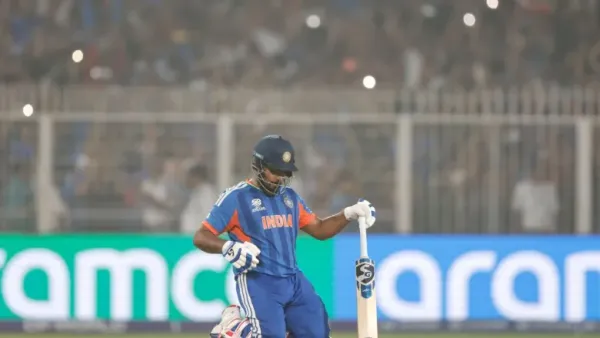
Sanju Samson’s journey in this World Cup was anything but straightforward. Heading into the tournament, Samson had endured a disappointing T20I series against New Zealand where he managed only 46 runs across five matches. As a result, he was initially left out of India’s playing XI and featured in only one group stage game against Namibia when Abhishek Sharma was unavailable.
But tournaments often turn on one bold decision. After India suffered a defeat to South Africa in the Super 8 stage, the team management made a crucial call by bringing Samson back into the lineup. That decision turned out to be one of the defining moments of the tournament. Samson responded in spectacular fashion.
He produced half centuries in the quarterfinal, semifinal, and the final, displaying remarkable composure and authority against some of the best bowling attacks in the competition. His ability to dominate spin and pace alike made him the centerpiece of India’s batting lineup. In the final against New Zealand, Samson once again rose to the occasion with a magnificent 89 that laid the foundation for India’s towering total of 255.
By the end of the tournament, Samson had amassed 303 runs and was rightfully named Player of the Tournament. It was a reminder that sometimes backing talent at the right moment can completely change the trajectory of a team’s campaign.
3. The Power of India’s All Round depth
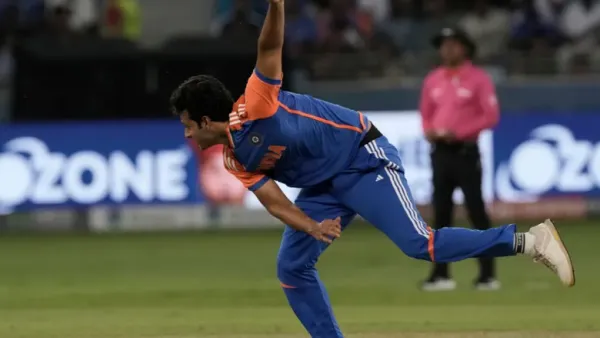
Modern T20 cricket is increasingly dominated by teams that possess multi dimensional players. India’s success in the 2026 World Cup was heavily built around a powerful trio of all rounders who provided balance and flexibility throughout the tournament.
Hardik Pandya, Shivam Dube, and Axar Patel formed a formidable trio that allowed India to play with extraordinary freedom.
Shivam Dube emerged as a genuine impact player in the middle order. Across nine matches, he scored 235 runs at a strike rate of nearly 170, frequently shifting the momentum of games with aggressive counter attacking knocks. In addition to his batting exploits, he also chipped in with five wickets, giving India a valuable sixth bowling option.
Hardik Pandya’s all round contributions added another dimension to the side. His ability to bowl in multiple phases of the game while also acting as a power hitter in the middle overs made him one of the most influential players in the squad.
Axar Patel, meanwhile, played a slightly different but equally important role. While he did not get many opportunities with the bat, his bowling remained consistently effective throughout the tournament. Axar ended the competition with 11 wickets, often delivering economical spells that choked opposition scoring rates.
Having three reliable all rounders meant India could adapt to different match situations without compromising on either batting depth or bowling options. That tactical flexibility proved invaluable over the course of the tournament.
4. The Jasprit Bumrah Effect

It may appear unfair to single out one individual in a team sport, but Jasprit Bumrah’s impact on India’s campaign was simply too significant to ignore.
At this stage of his career, Bumrah has evolved into something more than just a strike bowler. He has become India’s ultimate crisis manager with the ball. Throughout the tournament, whenever India needed control or a breakthrough, Rohit Sharma could turn to Bumrah and expect results.
His influence was most evident in the semifinal against England. With England needing 45 runs off the final three overs and seemingly on course for a dramatic finish, Bumrah stepped in to bowl the 18th over. What followed was a game changing spell.
Bumrah conceded just six runs in that over. The momentum instantly shifted back to India, effectively shutting down England’s chase. In the final, Bumrah once again delivered under pressure, finishing with a stunning 4-wicket haul that dismantled New Zealand’s batting lineup.
Across 8 matches in the tournament, Bumrah claimed 14 wickets and ended as the leading wicket taker. But beyond the numbers, it was his control, composure, and ability to execute under pressure that truly defined India’s bowling attack.
At the peak of his powers, Bumrah remains one of the most complete T20 bowlers in the world.
5. Two Years of Meticulous Preparation
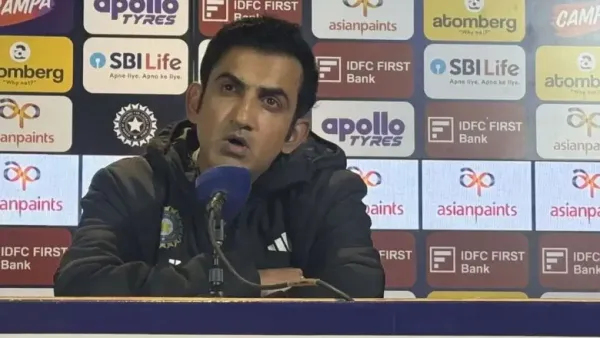
Championships are rarely accidental. India’s triumph in the 2026 T20 World Cup was the result of a carefully planned transition that began immediately after their victory in the 2024 edition of the tournament. Instead of sticking rigidly to the old core, India’s management gradually introduced a new generation of players who could carry the team forward in the shortest format.
Players like Tilak Varma, Abhishek Sharma, Sanju Samson, and Varun Chakravarthy were groomed extensively over the following two years. Through bilateral series and tournaments such as the Asia Cup, this group gained valuable experience and developed chemistry within the squad.
The results of that planning became evident in the World Cup. Abhishek Sharma provided aggressive starts at the top of the order, while Varun Chakravarthy added variety to India’s spin attack. Samson emerged as the tournament’s standout batter.
Another key inclusion was Ishan Kishan.
Fresh from a sensational Syed Mushtaq Ali Trophy campaign where he led Jharkhand to the title and scored a century in the final, Kishan was recalled to the Indian side for the bilateral T20I series against New Zealand just before the World Cup. He immediately justified the faith shown in him by scoring 215 runs in four innings, securing his place in the World Cup squad. Kishan carried that form into the tournament, finishing with 317 runs across nine matches and ending as the second highest run scorer of the competition. India’s success, therefore, was not just about talent but about building the right team over time.
A Dominant Campaign Capped with a Statement Victory
Winning a T20 World Cup requires far more than a single great performance. It demands consistency, depth, clarity of roles, and the ability to deliver under immense pressure.
India showcased all of those qualities throughout the 2026 tournament.
A dependable core, bold selection decisions, the strength of their all rounders, the brilliance of Jasprit Bumrah, and two years of careful planning all combined to create a team that looked nearly unstoppable.
The emphatic 96-run victory over New Zealand in the final was not just a win. It was a statement. India did not merely win the World Cup. They dominated it.
The post 5 reasons why India won the ICC T20 World Cup 2026 appeared first on Read.





Rinku Singh’s Heartbreaking Tribute To Late Father After World Cup Glory - Check Post

BCCI’s big announcement for World Champion Team India, will get a reward of more than Rs 100 crore

Mitchell Santner gracious in defeat as India stretch New Zealand's T20 World Cup wait: 'We were obviously...'

Tim Seifert clocked second-most runs in a T20 WC edition