Samira Vishwas
Tezzbuzz|09-03-2026
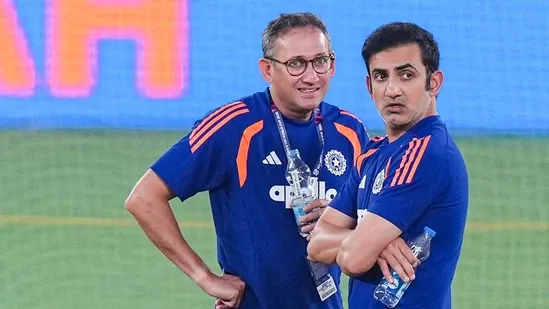
Gautam Gambhir did not use India’s T20 World Cup triumph to place himself at the centre of the story. In the afterglow of the title win, India’s head coach instead turned the spotlight on the people he believes helped build the system beneath the trophy.
At the post-match press conference, Gambhir dedicated the title to Rahul Dravid and VVS Laxman, while also thanking BCCI secretary Jay Shah and chief selector Ajit Agarkar. It was a moment that revealed both gratitude and continuity, with Gambhir framing India’s success as the product of a broader cricketing structure rather than a single campaign in isolation.
Gambhir points to the system behind India’s 3rd T20 World Cup title
“I want to dedicate this T20 World Cup to Rahul Dravid and VVS Laxman,” Gambhir said. “What Rahul bhai has done for Indian cricket. VVS for how he has been leading the CoE.”
That statement carried weight. Rahul Dravid may no longer be in charge of the senior side, but his role in shaping a stable, big-tournament-ready Indian white-ball unit has remained a major talking point. Gambhir’s words made it clear he sees this title not as a fresh chapter written from scratch, but as one built on foundations already laid.
His mention of VVS Laxman was equally telling. By praising the way he has led the Centre of Excellence, Gambhir pointed to the production line behind Indian cricket’s current depth. In a format that can turn brutally on small margins, India have increasingly looked like a side cushioned by resources, preparation and a constant supply of ready players. Gambhir’s tribute suggested that this success, too, began well before the final.
He then widened the frame further. “I want to thank Jay bhai for trusting me with the job. He was the only person who called me during my low times. Indian cricket is in safe hands with people like them around.”
That was the most striking part of the press conference. Gautam Gambhir is not usually given to public sentiment, and the reference to his “low times” added a personal layer to an otherwise institutional message. It turned a standard vote of thanks into something more revealing, a reminder that trust, in high-pressure jobs, often matters as much as tactical acumen.
Ajit Agarkar’s inclusion in the list of acknowledgements also fit that theme. Selection, leadership, development and coaching were all folded into Gambhir’s response, as though he wanted to underline one point above all others: trophies are lifted by teams, but they are often built by systems.
That, more than anything, was the essence of Gambhir’s message. On a night that could easily have been about glory, ownership and celebration, he chose to speak instead about inheritance, structure and faith. India had won the World Cup, but Gambhir made sure the credit travelled far beyond the dressing room.





T20 WC: 'India's Triumph A Moment Of Great Joy, No Amount Of Praise Would Be Enough,' Says BCCI VP Rajeev Shukla

'I don't believe in eras' - Gautam Gambhir shifts focus towards 2027 ODI World Cup

'I would like to win ten more trophies' - Hardik Pandya not satisfied with championships just yet

T20 World Cup 2026: 'More than courage, it was a tactical change' - Gautam Gambhir on backing Sanju Samson