
Sandy Verma
Tezzbuzz|27-02-2026
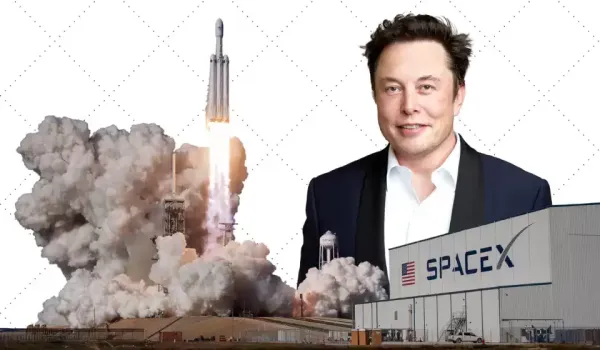
Washington/Texas. SpaceX founder Elon Musk, who has revolutionized the world of space, has made a surprising change in strategy regarding his biggest dream ‘Mission Mars’. Musk, who was adamant on establishing human settlement on Mars, has now turned his entire focus towards the Moon. Musk believes that establishing human cities on the Moon is not only more practical than Mars, but it could also be possible in a very short time. This U-turn of Musk has created a stir in the global space industry.
Settlement will be established on Moon 10 years earlier than Mars
In his recent address, Elon Musk clarified that while it may take at least 20 years to develop a self-sufficient city on Mars, on the Moon this goal can be achieved in the next 10 years. According to Musk, the distance of Mars and the harsh conditions there are a big challenge at the moment, whereas the Moon is so close to the Earth that a mission can be sent there every 10 days. The lunar mission has now become Musk’s first priority on both the technical and economic fronts.
Why did the ‘Red Planet’ lag behind? These are 3 big reasons
Referring to the obstacles coming in the way of Mars mission, Musk said that the environment there is not only poisonous, but the temperature is also bone-freezing.
- Distance and Time: The launch window between Earth and Mars opens only once every 26 months, limiting logistics and human dispatch.
- Hazardous Environment: Lack of oxygen and deadly radiation on Mars are a big threat to humans.
- Easy Access: On the contrary, it is easier to travel to the Moon and from there it is much easier to communicate with the Earth.
“Self-Grown City”: Robots will prepare homes for humans
According to Elon Musk’s new plan, a “Self-Grown City” will be developed on the Moon. Earlier Musk had talked about sending humanoid robots to Mars, but now these robots will create infrastructure on the surface of the moon. Musk believes that the experience of establishing a city on the Moon will later serve as a ‘blueprint’ for the Mars mission. However, he clarified that the dream of settling 10 thousand people on Mars by 2050 has not been broken yet, its priority has just been changed.
‘Plan-B’ is necessary for the future of humanity
Musk reiterated that for the long-term security of human civilization, it is essential to have self-sustaining settlements on planets other than Earth. Recent reports from SpaceX indicate that the company will now accelerate the use of its most powerful rocket ‘Starship’ for lunar missions. This decision of Musk also seems to coincide with NASA’s ‘Artemis Mission’, due to which the hope of increasing human activity on the Moon has become stronger.






T20 WC: 'We Bowled Really Nicely,' Says Markram After Proteas' Commanding Win Against West Indies In Super 8s

T20 World Cup 2026: 'Sanju Samson played exactly the way the team needed vs Zimbabwe' - Irfan Pathan

Indian batsmen thrashed Zimbabwe bowlers, made the second highest total in T20 World Cup history.

Indian batters rediscover form as India reach 256/4 vs Zimbabwe