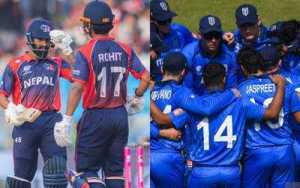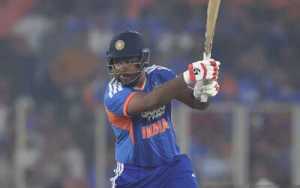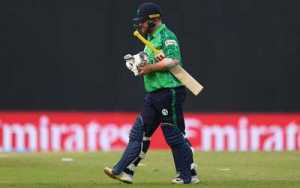

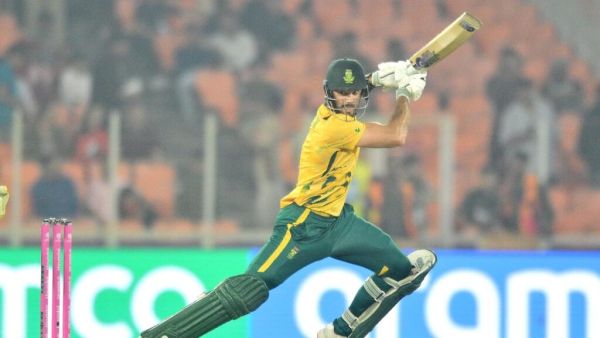
The build-up to the T20 World Cup 2026 was dominated by talk of how many teams would breach the 300-run mark, especially at Indian venues. The reality, however, has been quite the opposite. Fifteen matches into the tournament, even the 200-run mark has proved elusive. It has been crossed only twice so far: Scotland (207 against Italy) and South Africa (213 against Canada).
Between the end of the 2024 T20 World Cup and the start of this edition, there were 89 instances of teams going past 200, including matches involving associate nations.
If only contests between full-member sides are considered, the number drops to 48 out of 353 innings. In that period, teams breached 250 just five times.
“I think 300 and 250 are still kind of outliers anyway in the game. They are not that common,” Jos Buttler had said ahead of England’s fixture against the West Indies. “They are more common than they have been, but it’s not like every game is a game like that,” he added.
Since 2025, the average first-innings score between two full-member nations, before the start of this event, was 169.
In the first 15 games of this World Cup, it stands at 175.While there has been a broader shift towards more aggressive batting compared to previous editions, World Cup cricket often differs from bilateral series in approach and intent.
“In bilateral cricket, the pressures and the consequences of the result are a little bit different. I think generally in World Cups, you see teams play the percentages a little bit more, maybe not risk as much. I might be wrong on that, but I think that’s a general thing,” Buttler explained.
Since 2022, full-member batting sides have attempted attacking shots on 68 per cent of deliveries on average in bilateral series.
However, across the three World Cups in this period, that percentage has dipped below the bilateral average. The closest it came was during the 2022 edition in Australia, where pitches were more consistent than at subsequent tournaments in the USA and West Indies (2024) and India and Sri Lanka (2026).Beyond teams consciously minimising risk, conditions have also dictated terms. Even if sides arrive on the back of playing on flatter tracks, pitches during a four-week tournament inevitably undergo wear and tear, especially with multiple day games.
“You get the day games, so you don’t get that dew factor in the evening, which quickens up the pitch and the outfield and makes it hard for the bowlers,” Australian fast bowler Nathan Ellis said.
Australia began its campaign in a 3 PM match at the R. Premadasa Stadium in Colombo, on the same pitch where Sri Lanka had played Ireland a couple of nights earlier. Ellis noted that it was always going to get progressively slower under the sun. “You obviously get traffic on the pitches, so they’re a little bit more tired, potentially get slower.”
Buttler had also pointed to a similar pattern during the 2019 ODI World Cup, where 11 AM starts altered conditions from what teams were accustomed to.
“I remember in 2019, going into the 50-over World Cup, everyone was talking about 350-400 scores and the flat wickets in England. But then it turned out, with 11 o’clock starts, PowerPlay bowling was the key thing, and in the final we played the 240 runs kind of cricket.”
Ellis, however, believes the scoring pattern could shift once the tournament moves into night games.
“I’m expecting some good wickets as well in the night-time games once you get over to India, those wickets over there, the ball flies around in the small grounds,” Ellis reckoned.
England’s former white-ball captain Jose Buttler said that though high scores of over 250 have become more common, it has yet to become a norm.
| Photo Credit:
EMMANUAL YOGINI
England’s former white-ball captain Jose Buttler said that though high scores of over 250 have become more common, it has yet to become a norm.
| Photo Credit:
EMMANUAL YOGINI
Buttler, too, did not rule out the possibility of a team breaching the 250-run mark in this edition. “I think going around India and having played here a lot before, there may be games that might play out that way. But there will also be tighter, closer games.”
For now, the early trend has underlined that World Cups rarely follow pre-tournament hype. While the T20 format continues to evolve towards higher risk and higher reward, context remains king: match situation, pitch fatigue, start times and tournament pressure all shaping outcomes.
Published on Feb 12, 2026