

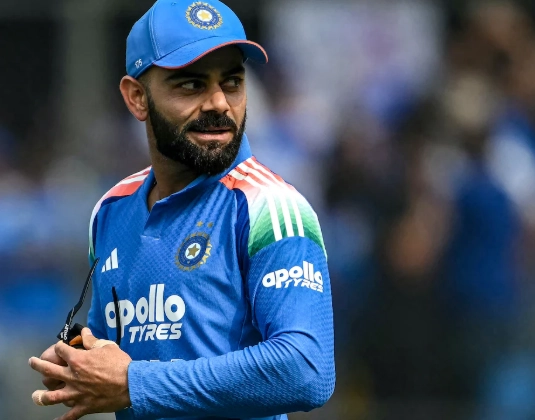
Virat Kohli reminds BCCI why India still relies on him in crunch situations as its irreplaceable saviour
Probuddha Bhattacharjee
MSN|22-01-2026
Virat Kohli’s future has become one of the most talked-about subjects in Indian cricket, though, truth be told, it is also among the most baseless. If his performances in the last six ODIs are anything to go by, Kohli is very much on course to play the 2027 World Cup in South Africa. Anything else would only be a loss for the Indian team.
In a tense chase, India still looks for Virat Kohli the way a ship looks for its lighthouse. Not because the rest can’t bat, but because pressure in pursuit is less about shot-making and more about taking the right decisions. And Kohli, even now, remains India’s clearest decision-maker with the bat under pressure: the one who can turn panic into a plan, keep the scoreboard moving with percentage cricket, and make the chase feel alive even when it is trying to die.
The Indore case study
The third ODI against New Zealand at Indore was the most honest example and explanation of this dependence. New Zealand put up 337 for 8, driven by a massive 219-run partnership between Daryl Mitchell and Glenn Phillips. India’s response began the way high-pressure chases often begin: one or two early jolts and the target suddenly looks bigger than it did at the end of the first innings. At 338 to win, the chase needed two things in parallel: power at the right moments and stability almost throughout. India's stability came almost entirely from one address. Virat Kohli.
His 124 off 108 balls was not just a decorative hundred. It was structural. It carried the chase through the dangerous middle-over period where wickets and required rate usually squeeze together like closing doors. He built, rotated, picked his overs, and drafted India back into the game. As long as Kohli was around in the middle, everything looked doable. The moment he got out, the final nail in India’s coffin was driven.
India were bowled out for 296 in 46 overs, losing by 41 runs. And the storyline wasn’t that India lost with a centurion – it was how the innings crumbled under pressure around that centurion.
Why does Kohli become the default in chase pressure
Chasing pressure is altogether a different sport because the scoreboard talks back. Every dot ball feels louder. Every wicket changes the required rate more brutally than it changes the score. That is why teams don’t just need talent; they need a batter who can keep the chase mathematically sane.
Kohli’s chase craft has always been built around that idea. He doesn’t play chases like a gambler. He plates them like a controller. He manages three things at once:
1. He keeps the inning breathing
In chases, the oxygen is strike-rotation. Kohli’s greatest skill under pressure is the refusal to let dots stack. When boundaries dry up, he doesn’t freeze.
2. He keeps partners functional
A lot of batters score runs; fewer make the other batter better. In a chase, the non-Kohli end often looks calmer simply because the plan is clear: run hard, stay with him and don’t give your wicket.
3. He keeps the escalation timed
Chases are won by choosing the right overs to attack. Virat Kohli’s best efforts in chases don’t look like constant aggression; they look like a controlled climb that suddenly turns into a sprint. Indore had all three on display. The chase never looked comfortable, but with him there, it looked possible.
What Indore exposed: the line between dependence and design
It is tempting to frame this as a problem: Why does India still depend on one man? But part of it is simply how modern batting has been shaped. India’s top order is built to dominate. That often means higher variance, and variance is fine until it meets a steep target. In those games, you need a stabiliser who can absorb chaos without letting the target run away.
Indore was the exact script. Once India were pushed into a high-required-rate chase, they needed someone to do the unglamorous job: keep wickets intact long enough for the finish to be realistic. Kohli did it. The rest collectively couldn’t complete it.
Even the support acts in the chase tell you the same story. There were fighting contributions lower down, but they were tethered to Kohli’s knock. When the tether snapped, the chase spiralled away.
Why otn’t others replicate this role easily?
India has finishers. India has stroke-makers. India has players who can win a chase in 25 balls. What India doesn’t always have in the XI is a second anchor under fire who can do the Kohli job. The role asks for a unique blend:
- The calm to accept singles when the crowd wants sixes.
- The game sense to know which bowler to target.
- And when the discipline to keep your wicket even when the required rate is trying to bully you.
Many great batters have one or two of those traits. Virat Kohli has made a career out of putting all three together, repeatedly, under the harshest spotlight.
The uncomfortable takeaway and the forward path
Indore wasn’t just a loss. It was a reminder of the chase psychology. When the chase gets messy, a team still needs one batter to be the spine. And when that spine is removed, the effort often becomes a collection of individual innings rather than a coordinated pursuit.
The solution isn’t to stop leaning on Kohli. The solution is to stop needing to. India’s next step should be role clarity: build another batter in the XI, whose job description includes “if the chase wobbles, you steady it.” Not every game. Not every series. But often enough that a big chase can be planned around him.
Until that happens, the dependence will keep returning - not as an insult to India’s depth, but as a complement to the one man who still makes pressure chases feel navigable.
In a tense chase, India still looks for Virat Kohli the way a ship looks for its lighthouse. Not because the rest can’t bat, but because pressure in pursuit is less about shot-making and more about taking the right decisions. And Kohli, even now, remains India’s clearest decision-maker with the bat under pressure: the one who can turn panic into a plan, keep the scoreboard moving with percentage cricket, and make the chase feel alive even when it is trying to die.
The Indore case study
The third ODI against New Zealand at Indore was the most honest example and explanation of this dependence. New Zealand put up 337 for 8, driven by a massive 219-run partnership between Daryl Mitchell and Glenn Phillips. India’s response began the way high-pressure chases often begin: one or two early jolts and the target suddenly looks bigger than it did at the end of the first innings. At 338 to win, the chase needed two things in parallel: power at the right moments and stability almost throughout. India's stability came almost entirely from one address. Virat Kohli.
His 124 off 108 balls was not just a decorative hundred. It was structural. It carried the chase through the dangerous middle-over period where wickets and required rate usually squeeze together like closing doors. He built, rotated, picked his overs, and drafted India back into the game. As long as Kohli was around in the middle, everything looked doable. The moment he got out, the final nail in India’s coffin was driven.
India were bowled out for 296 in 46 overs, losing by 41 runs. And the storyline wasn’t that India lost with a centurion – it was how the innings crumbled under pressure around that centurion.
Why does Kohli become the default in chase pressure
Chasing pressure is altogether a different sport because the scoreboard talks back. Every dot ball feels louder. Every wicket changes the required rate more brutally than it changes the score. That is why teams don’t just need talent; they need a batter who can keep the chase mathematically sane.
Kohli’s chase craft has always been built around that idea. He doesn’t play chases like a gambler. He plates them like a controller. He manages three things at once:
1. He keeps the inning breathing
In chases, the oxygen is strike-rotation. Kohli’s greatest skill under pressure is the refusal to let dots stack. When boundaries dry up, he doesn’t freeze.
2. He keeps partners functional
A lot of batters score runs; fewer make the other batter better. In a chase, the non-Kohli end often looks calmer simply because the plan is clear: run hard, stay with him and don’t give your wicket.
3. He keeps the escalation timed
Chases are won by choosing the right overs to attack. Virat Kohli’s best efforts in chases don’t look like constant aggression; they look like a controlled climb that suddenly turns into a sprint. Indore had all three on display. The chase never looked comfortable, but with him there, it looked possible.
What Indore exposed: the line between dependence and design
It is tempting to frame this as a problem: Why does India still depend on one man? But part of it is simply how modern batting has been shaped. India’s top order is built to dominate. That often means higher variance, and variance is fine until it meets a steep target. In those games, you need a stabiliser who can absorb chaos without letting the target run away.
Indore was the exact script. Once India were pushed into a high-required-rate chase, they needed someone to do the unglamorous job: keep wickets intact long enough for the finish to be realistic. Kohli did it. The rest collectively couldn’t complete it.
Even the support acts in the chase tell you the same story. There were fighting contributions lower down, but they were tethered to Kohli’s knock. When the tether snapped, the chase spiralled away.
Why otn’t others replicate this role easily?
India has finishers. India has stroke-makers. India has players who can win a chase in 25 balls. What India doesn’t always have in the XI is a second anchor under fire who can do the Kohli job. The role asks for a unique blend:
- The calm to accept singles when the crowd wants sixes.
- The game sense to know which bowler to target.
- And when the discipline to keep your wicket even when the required rate is trying to bully you.
Many great batters have one or two of those traits. Virat Kohli has made a career out of putting all three together, repeatedly, under the harshest spotlight.
The uncomfortable takeaway and the forward path
Indore wasn’t just a loss. It was a reminder of the chase psychology. When the chase gets messy, a team still needs one batter to be the spine. And when that spine is removed, the effort often becomes a collection of individual innings rather than a coordinated pursuit.
The solution isn’t to stop leaning on Kohli. The solution is to stop needing to. India’s next step should be role clarity: build another batter in the XI, whose job description includes “if the chase wobbles, you steady it.” Not every game. Not every series. But often enough that a big chase can be planned around him.
Until that happens, the dependence will keep returning - not as an insult to India’s depth, but as a complement to the one man who still makes pressure chases feel navigable.
Related News





Latest Newsmore

No Rest for Shubman Gill As India's ODI Skipper Turns Focus To Ranji Trophy
21-Jan-2026 • PTI

'He might actually start at T20 World Cup' - Aakash Chopra's bold take on India's comeback star
21-Jan-2026 • CricTracker

WPL 2026: Lizelle Lee Fined For Code Of Conduct Violation
21-Jan-2026 • CricketnMore
'Has never been consistent' - Irfan Pathan's blunt take on Sanju Samson ahead of New Zealand T20Is
21-Jan-2026 • CricTracker

T20 WC 2026 Trophy Reaches Alma Maters Of Pandya, Kishan And Samson
21-Jan-2026 • CricketnMore