
Sandy Verma
Tezzbuzz|08-01-2026
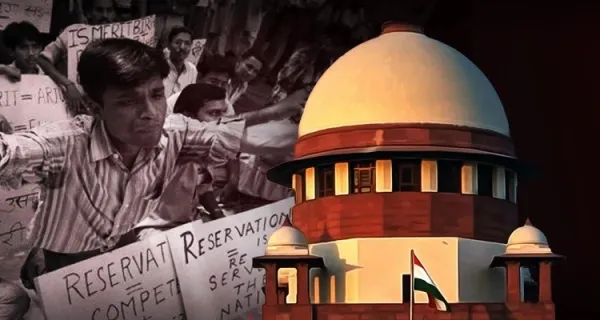
New Delhi . The Supreme Court of the country has given a historic decision regarding the reservation and selection process in government jobs, which will change the direction of all future recruitments. The Supreme Court has made it clear that unreserved or general category is not a reserved quota for any particular category, rather it is an open platform based purely on merit.
The direct message of this decision of the court is that if any candidate from the reserved category scores more marks than the cut-off of the general category without any relaxation or concession in age limit, then he will necessarily be considered selected on the general category seat. This decision is not only in favor of meritorious students, but it also gives new strength to the principles of constitutional equality.
The bench of Justice Dipankar Dutta and Justice AG Masih, while clarifying this legal position, said that open category in government jobs means that there will be no walls of caste or community.
The only criterion for admission will be the merit of the candidate. The court said in strong words that the reserved background of a candidate cannot prevent him from being a part of the general list. Even if a situation arises during recruitment examinations where the cut-off of the reserved category goes higher than that of the general category, exclusion of eligible candidates from the general category would still be a direct violation of the rights to equality guaranteed under Articles 14 and 16. It has often been argued at the administrative level that selection of a reserved category student on a general seat is like giving him double benefit.
The Supreme Court completely rejected this argument and made it clear that success achieved on the basis of merit cannot be kept in the category of additional benefits. The court is of the view that if meritorious candidates are confined to their reserved categories, it would be an insult to talent and would hurt the spirit of equal opportunity. Mentioning caste while filling the form is only a means to claim reserved benefits, it cannot become a weapon to deny a candidate a seat on the basis of his/her merit.
This judicial clarity comes after a controversy to the recruitment of judicial assistants and clerks in Rajasthan. In this case, many reserved category candidates had scored more marks than the general category cut-off, yet they were excluded from the selection process. After the intervention of Rajasthan High Court and now the final approval of the Supreme Court, it has been decided that merit will remain paramount. This decision will have far-reaching implications; While on one hand the competition in the general category will become more intense, on the other hand new doors of success will open for talented youth from deprived sections. This decision of the apex court lays the foundation of a fair and transparent selection system in the government system, where merit will no longer be limited by caste boundaries.






England Team With Brain Isn't Good Enough To Compete With Australia Or India: Kevin Pietersen

Sarfaraz Khan Slams Fastest List A Half-century By An Indian

WPL 2026: 'Please come prepared' - Jhulan Goswami calls out reporter after factual error

BPL 2025-26: Match 19, CHR vs RJW Match Prediction – Who will win today's BPL match between Chattogram Royals vs Rajshahi Warriors?