
ABP Live Sports
abplive|19-12-2025
The T20 series between India and South Africa is approaching its decisive stage. After the fourth match in Lucknow was abandoned without a single delivery being bowled, attention has now shifted entirely to the fifth and final T20 in Ahmedabad.
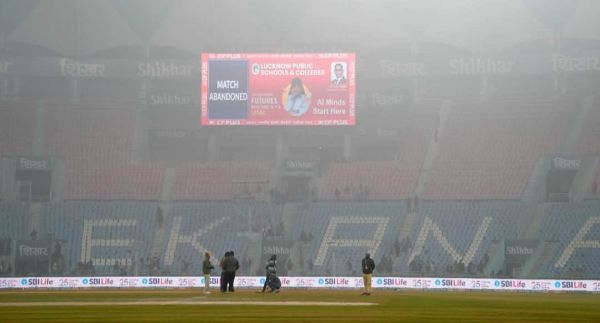
The washout in Lucknow, caused not by rain but by heavy smog and dangerously low visibility, has raised fresh concerns in Indian cricket.
Traditionally, weather interruptions have been linked to rain or fading light, but air pollution has now emerged as another serious challenge.
The fourth T20I, scheduled at the Ekana Stadium in Lucknow, was canceled due to dense smog that severely reduced visibility.
On the day of the match, air quality levels were extremely poor, with AQI entering a hazardous zone. Under such conditions, match officials deemed it unsafe for players and umpires to take the field.
With Lucknow fixture abandoned, IND vs SA T20 series now hinges on fifth T20, set to be played on Friday at the Narendra Modi Stadium in Ahmedabad.
India currently hold a 2-1 lead, with one match producing no result. The final game effectively serves as the series decider - South Africa will be desperate to draw level, while India will be looking to seal the series with a victory on home soil.
The main concern heading into the final match is whether Ahmedabad’s air quality could pose similar problems.
Current data suggests that conditions there are far better than those witnessed in Lucknow. While Lucknow’s AQI crossed the 400 mark, Ahmedabad’s readings have hovered around 170-180.
According to AQI standards, this falls into the ‘unhealthy’ category, but visibility is not expected to be significantly affected.
Although PM10 and PM2.5 levels remain on the higher side, experts believe they are unlikely to disrupt play.
Narendra Modi Stadium is also known for hosting matches smoothly, and T20 fixtures there have rarely faced interruptions. As things stand, the fifth T20I between India and South Africa is expected to go ahead as planned.
However, Lucknow episode has once again sparked debate around BCCI’s scheduling decisions, particularly the wisdom of hosting international matches in North India during the peak winter pollution season.





Why did LSG bid Rs 20 crore for Mathisha Pathirana? Team owner Sanjeev Goenka explained the reason

CSK Probable Playing XI, IPL 2026: Squad composition, full list of players; Chennai Super Kings predicted line-up

'They got him at a very big discount' - Former South African captain praises RCB for Venkatesh Iyer's signing ahead of IPL 2026

Jharkhand captures Mushtaq Ali Trophy for the first time, becomes champion under the captaincy of Ishan Kishan