

ABP Live Sports
abplive|12-12-2025
The second T20I between India and South Africa in Mullanpur featured a moment that sparked plenty of debate among fans - a fielding effort from Shubman Gill that still resulted in six runs for South Africa.
Even though Gill made a brilliant leap to keep the ball inside the rope, the umpire signaled a six. Here’s why.
The incident took place in the 15th over of the innings. Shivam Dube was bowling and Dewald Brevis lofted a shot toward long-off. Gill timed his jump perfectly and appeared to flick the ball back into play. However, replays showed that before he made contact with the ball, Gill’s foot had already made contact with the boundary cushion.
According to MCC laws, if a fielder is in contact with the boundary while touching the ball, the delivery is automatically counted as a six, regardless of whether the ball physically crosses the rope. Since Gill’s foot was on the boundary line at the moment he touched the ball, the umpire had no choice but to award six runs.
Fortunately for India, Brevis didn’t stay long at the crease. He was dismissed for 14 by Axar Patel shortly after.
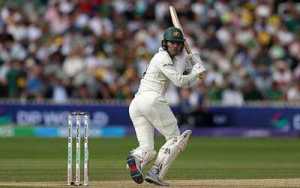
The real damage, however, came from Quinton de Kock, who unleashed a sensational knock of 90 off 46 balls.
His innings included 5 fours and 7 massive sixes, making it his highest T20I score against India. He fell short of what would have been his first T20I century versus India, but his effort powered South Africa to a huge total.South Africa unleashed a massive total of 213/4 after India chose to bowl first. The innings was dominated by Quinton de Kock, who scored a magnificent 90, narrowly missing a century.
An expensive spell from Arshdeep Singh and late cameos from Donovan Ferreira and David Miller propelled the Proteas to a formidable total on Mullanpur track.






BCCI considering INR 2 Crore pay cut for Virat, Rohit in upcoming December 22 review

Windies dismissed for 205 on day 1 of 2nd Test vs NZ

U19 World Cup 2026: Sharma ji’s son in Australia team, Vaibhav Suryavanshi has scored a century while facing
West Indies replace Tagenarine Chanderpaul with T20 specialist in 2nd Test vs New Zealand