
Samira Vishwas
Tezzbuzz|21-11-2026
After clinching both the T20I and ODI rubbers, India entered the two-Test series looking to complete an unprecedented grand slam in New Zealand.
To win in all three formats, especially when playing away from home, is a highly laudable achievement for any team. For India, this would be spectacular.
While India’s first overseas win came in New Zealand (3-1 in 1968 captained by Mansur Ali Khan Pataudi), success since then has been rare.
Also read: ‘Sandpapergate is one of the biggest controversies in cricket’ | Ayaz Memon interview
The only other time India won a Test series there was more than four decades later, in 2009.
On their last tour there, in 2019, the scoreline read 0-2 against.NZ’s stunning upset in India
The rivalry took a dramatic twist in 2024 when New Zealand came to India and pulled off a stunning upset, winning 3-0. This unexpected whitewash left pundits speechless and Indian fans stupefied.
Such a brutal hammering on pitches curated to help India’s bowlers and batsmen didn’t subscribe to conventional cricket logic. The Kiwis turned such logic on its head, outclassing India in all aspects.
India have been seeking to avenge that humiliation since. How to beat the Kiwis has been a constant refrain in Indian circles in the past two years, and accentuated by the fact that India have, in the interim, stumbled badly against South Africa at home, and put up a tepid performance against Sri Lanka a couple of months back.
These below-par performances put India in a precarious position in the current cycle of the World Test Championship (WTC). Of the seven Test matches they still have remaining (2 vs New Zealand on this tour, 5 vs Australia in a home series), India have to win at least 6 to be in the race to qualify for the WTC final.
Siraj, Jadeja dropped
Winning both the T20 and ODI series gave India momentum and their ambition to win the Test series against New Zealand a massive fillip. For this campaign, players had been chosen well in advance, got sufficient time to acclimatise. Heading into the first match, it was all systems go.
Also read: Ind vs NZ, 1st Test: Jaiswal, Rahul lead India’s strong reply on Day 2
However, on the first day of the first Test currently underway in Wellington, the team got mired in turmoil when Shubman Gill’s side took the field without star fast bowler Mohamed Siraj and veteran all-rounder Ravindra Jadeja.
On India’s last overseas tour to England in 2025, these two had played pivotal roles in India coming from behind to draw the tough series 2-2. Their absence raised several eyebrows.
Jadeja’s omission could at least be rationalised: the Wellington pitch was historically known to help fast bowlers more than spinners. And since New Zealand had four left-handers in the top 6, an off-spinner could be of more value than a left-arm slow bowler.
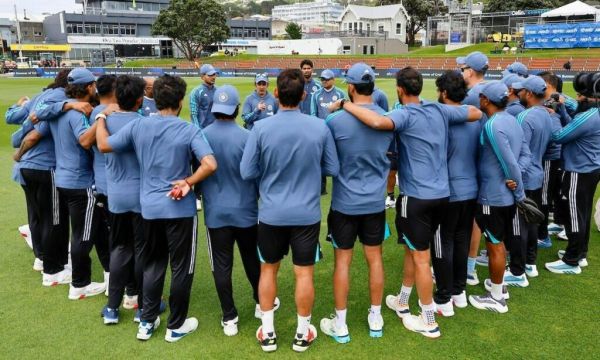
Mohammed Siraj bowls during a training session in Wellington. Photo: BCCI
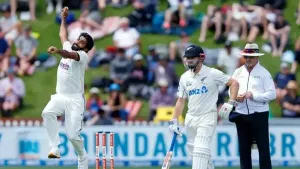
However, Siraj being dropped left everyone bewildered. Apart from the redoubtable Jasprit Bumrah, he has been India’s most experienced and successful fast bowler in the last few years.
Gavaskar, Shastri question Siraj’s omission
Former India captains Sunil Gavaskar and Ravi Shastri raised pertinent questions of the team management’s decision as New Zealand fought back from a crisis (70/5 at one stage) into a position of strength, finishing the day on 243/5.
“If pace, skill and seam movement was the criteria and 140 clicks was hard to come by, one has to ask the question: Where was Mohamed Siraj,” Shastri posted on X (Formerly Twitter) after the day’s play.
Earlier, while play was in progress, Gavaskar wondered how a bowler with more experience and wickets than of the others in the playing XI (barring Bumrah) could have been overlooked. “Is Siraj not among the top 4 fast bowlers in the squad?” Gavaskar bristled.
The decision to drop Jadeja and Siraj is widely perceived as Gautam Gambhir’s. Since he took over as chief coach two-and-a-half years back, Gambhir has become the most influential power centre in determining which 11 players will take the field in any match. He and the captain provide their views to the selectors in picking the squads for different formats, but where the playing XI is concerned, the final call is reported to be Gambhir’s.
Gambhir’s hits and misses
An avowed debunker of ‘star culture’ in Indian cricket, the playing XIs since Gambhir became chief coach have been a litany of hits and misses, producing mixed results, and leaving behind a trail of inopportune, if not premature, retirements of reputed players.
For instance, acclaimed all-rounder Ravichandran Ashwin quit cricket in the middle of the Test series against Australia in 2024.
A few weeks later, captain Rohit Sharma, and in his wake, master batsman Virat Kohli, announced their retirement from Test cricket, opting to play only in ODIs.
In this phase, young batsman Sarfaraz Khan, with an enviable record in first-class cricket and an above average one in Tests, was dumped from the Test team. He still awaits a recall.
At the other end of the pole, pace bowling maestro Mohammed Shami, trying to make an international comeback after an injury suffered in 2023-24, ground out excellent results in domestic cricket over two season but failing to get a call-up from selectors, his patience finally ended earlier this month and he announced his retirement from Test cricket.
Whether Shami, whose skill sets are still considered invaluable for next year’s ODI World Cup on South African pitches, will still be considered is moot.
Horses for courses policy
Indeed, going by the manner in which Siraj and left-arm spinner Kuldeep Yadav were given only token opportunity in the recently concluded ODI series against New Zealand, puts their participation in the World Cup under a cloud.
Given Gambhir’s mercurial methods, it would be presumptuous to read the situation in black and white.
The chief coach himself argues vehemently that he is guided by a horses-for-courses policy in team selection and attempts to put the best 11 players to win the match.
Over the remaining part of the first Test and then the second, not just the team’s performance, but Gambhir’s team selection will also be under close scrutiny. As things stand, India are placed no.4 in the WTC rankings currently headed by defending champions South Africa, with New Zealand no.2 and Australia no.3. To move upward, India have to snake past the Kiwis and then the Aussies.
Even beating New Zealand in both Tests in this series won’t guarantee a place in the WTC final, but it will go a long way toward validating Gambhir’s selections and keeping critics at bay.

Glenn Phillips creates history, joins Rohit Sharma in elite list with 118 against India

Henry Nicholls creates history at Wellington with 175* in 1st Test against India
Karnataka wins maiden Senior Women’s T20 Trophy Elite title after beating Railways in final

Usman Khawaja branded traitor after fresh Sandpapergate details shake Australia