


'Thought my chance would come in red-ball cricket first,' says Auqib Nabi
toi
newspoint|13-11-2026
Red-ball cricket has been his calling card but it was the white ball that eventually brought Aqib Nabi his India breakthrough. Having built his reputation through domestic performances in the longer format, the Jammu & Kashmir medium-pacer believed Test cricket would be his route into the national side. Instead, the selectors had a different plan, taking the 30-year-old by surprise.
“I wasn’t expecting a white-ball call-up, to be honest. I thought my opportunity would come in red-ball cricket, in the Test format. But I see this (playing ODI cricket for India) as a great chance to showcase my skills,” Nabi said ahead of the fourth ODI between India and New Zealand .
After a difficult ODI debut against the West Indies in Sept, where he conceded 84 runs without success on a flat Guwahati surface, Nabi has found conditions more to his liking in New Zealand. He has taken two wickets so far in his first four ODIs, both coming in India’s rain-affected victory in Wellington.
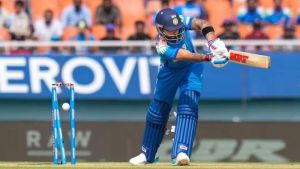
In this short stint with the national team so far, there has also been a learning curve for Nabi. Bowling in New Zealand for the first time, he is focusing more on getting seam movement rather than conventional swing. “This is my first time bowling in New Zealand, so the conditions are a little different. You have to rely more on seam movement because top-level batters can play swing well. That was the feedback from Rohit bhai, Virat bhai and Shubman. If you bowl a scrambled-seam delivery or hit the deck hard, there is a greater chance of taking wickets here,” he said.
‘Conditions similar to J&K’
Interestingly, Nabi does not find the conditions entirely unfamiliar. The weather and surfaces in New Zealand, he believes, have similarities with those back home in Jammu & Kashmir. “The weather is quite similar because we experience comparable conditions back home as well. The main difference is the level of opposition. International cricket is different from domestic cricket, but the wickets are quite similar,” he said.
The soft-spoken Nabi may not be blessed with express pace, but is confident that other attributes in his game can help him succeed at the highest level. “Of course, having extra pace is always an advantage. But I back my skills. I have performed well with them in domestic cricket, and I believe those strengths will help me at this level too,” he said.
Related News




Latest Newsmore

Pakistan pacer Saqib Khan joins elite list after claiming 7/130 vs SL in Rawalpindi Test
13-Nov-2026 • Samira Vishwas

IPL 2027: Cameron Green, Trent Boult among five players on the chopping block
13-Nov-2026 • Samira Vishwas

Shukri Conrad provides major update on Anrich Nortje's injury ahead of Bangladesh Tests
13-Nov-2026 • toi
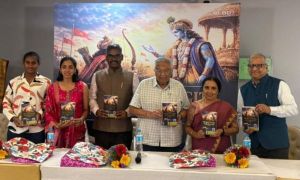
‘The Bhagavad Gita and The Athlete’s Mind’ book launched in Bengaluru
13-Nov-2026 • Samira Vishwas
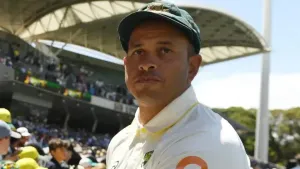
Usman Khawaja called poor teammate, accused of faking hamstring injury
13-Nov-2026 • Samira Vishwas