
Samira Vishwas
Tezzbuzz|09-11-2026
Fast bowlers doing well in helpful New Zealand conditions is like batters doing well on good pitches of the sub-continent — one can’t read too much into it.
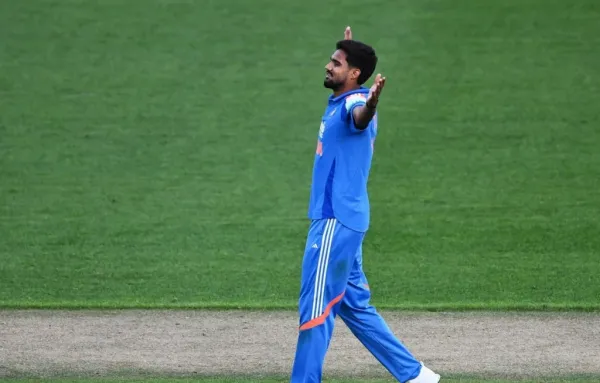
One thing is certain, though. If there is juice in the pitch, Gurnoor Brar is going to be a handful for the batters. He has provided proof of that in the first two ODIs, claiming three wickets in Auckland (9.2-0-44-3) and four in Wellington (10-2-30-4).
If he can add the bowling smarts of a Jasprit Bumrah, Brar has it in him to be a pace bowlers for all conditions at the international level.
If one views the New Zealand series as an audition for the 2027 ODI World Cup, the 26-year-old pacer has been very impressive. He is not a pure swing bowler like Anshul Kamboj or Aquib Nabi, but he has been very much at home in helpful conditions.
As far as India’s World Cup bowling plans go, Bumrah apart Mohammed Siraj and Prasidh Krishna are good bets due to their experience. Among the pacers India tried in the first two ODIs in the current series – Kamboj, Nabi and Arshdeep Singh – Brar looks the kind who can play in all formats in all conditions.
Kamboj and Nabi are likely to be effective when the pitch or conditions offer assistance.The World Cup being in South Africa, pacers should get carry and bounce. However, compared to the conditions in New Zealand — rain aided movement — the World Cup pitches will be better to bat. On such tracks, a tall bowler pounding the deck at pace is best suited for the middle overs.
In his post-match media interaction, Brar made his World Cup ambitions clear: “The ultimate goal is to win the World Cup, and that is always at the back of my mind.
I focus on how I can improve in the next match. We are going to Hamilton now (3rd ODI), and I will look at how I can minimise my mistakes and improve.”Saturday’s game was the first time Brar took four wickets in an ODI. Using his height and pace, he exploited the help in the surface. The bowling played a big role in India’s eventual four-run win (DLS method) after a heavy downpour brought a premature end to the game.
Brar’s control was impressive. He wasn’t just running in and going flat out.
The highlight was his double-wicket maiden, the 20th over. Despite the short square boundaries at the Hnry Stadium, Brar used the short-ball tactics brilliantly, getting Tom Latham and Glenn Phillips and reducing NZ to 53/5.It was setting up the batter with a good bowling plan. Another example was how he got NZ captain Mitchell Santner, who had looked fluent scoring 31. The delivery after Santner pulled him for six over square leg, Brar went to hard length. The batter was beaten trying to back away again and the outside edge was taken by keeper KL Rahul.
For his fourth scalp, Nathan Smith, Brar pinned him to the crease with short balls and then hit the hard length to take the outside edge.
It was the work of a thinking bowler.“Every day, I learn what I could have done better. That is what I take away from every match, and I try to retain the good things in my memory,” said Brar.
“The short-ball wickets were good, but before that, whatever spell I had bowled, I was trying to go fuller so that I could make the batter play forward. With that patience, I know my bouncer is effective, but overusing it would be wrong. It is important to use it at the right moment, and that is what happened here.”
Brar is not just fast, he lets the batter know what they are dealing with — his aggressive, in-your-face body language. The New Zealand batters have got a taste of it in the ODIs. He sees it as gamesmanship to get under the skin of the batter.
He had a verbal showdown with NZ’s topscorer Daryl Mitchell (55) in the second ODI. Brar said he used verbal sparring to build pressure. “I back myself. He was batting well in the conditions, so I thought I could make him do something different by saying something to him. That happened in that over. I said a few things, and he also left a few balls. I made some gestures as I walked towards him, and in the next over, he got out.”




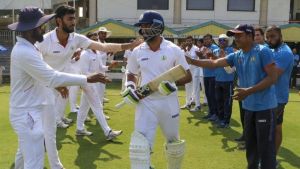
One ODI, zero regrets: How Vidarbha stalwart Faiz Fazal is prudently building his second innings
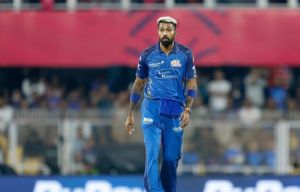
IPL: Hardik Pandya-Arshdeep Singh trade close to reality

Gurnoor Brar delights in lively New Zealand pitches after Wellington ODI spell
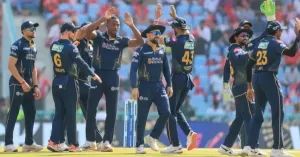
3 players who can be released by Gujarat Titans (GT) before IPL 2027 auction