
Sandy Verma
Tezzbuzz|06-11-2026
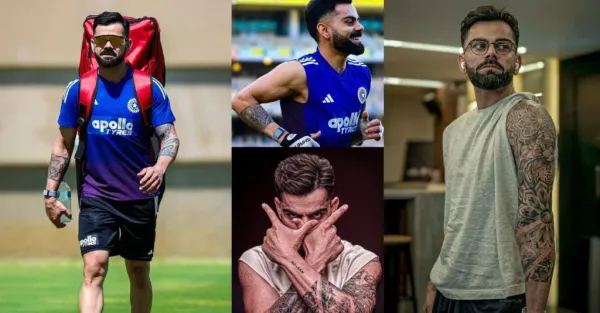
Virat Kohli‘s legacy extends far beyond his extraordinary achievements on the cricket field. While his batting records, competitive spirit and passion for the game have made him one of cricket’s most celebrated figures, his tattoos offer a fascinating glimpse into his personal life, beliefs and journey.
A closer look at his left arm, right bicep and torso reveals an elaborate collection of body art, with each design carrying a special meaning. Kohli has 13 tattoos, ranging from tributes to his parents and milestones in Indian cricket to spiritual symbols and representations of his personal philosophy.
Rather than being simple fashion statements, these tattoos reflect different chapters of his life, highlighting his family values, warrior-like mentality and growing spiritual outlook. Let’s have a look at all 13 tattoos associated with the Indian cricket superstar and uncover the stories and symbolism behind them.
13 Tattoos, 13 Stories: The real meaning of Virat Kohli’s body art
Family and cricket: The foundations of Kohli’s journey
Family and cricket have played defining roles in Kohli’s life. Some of his tattoos pay tribute to the people closest to him and commemorate the beginning of his remarkable international career.
1. His Mother’s Name (Saroj)
Kohli has always acknowledged the importance of his family in shaping his personality and career. One of his tattoos features his mother’s name, Sarojwritten in Hindi on his left arm.
The design is a heartfelt tribute to the woman who has been an important source of encouragement and support throughout his journey.
Keeping her name close to him serves as a permanent reminder of his roots and family values.2. His Father’s Name (Prem)
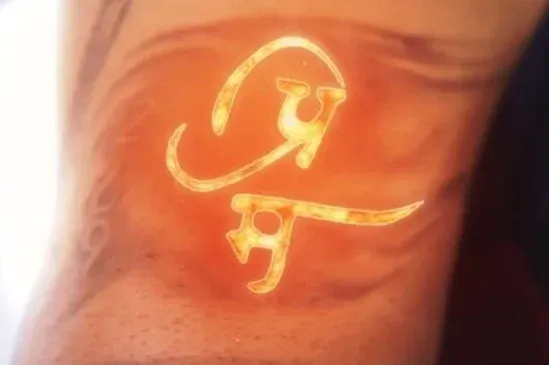
Another deeply personal tattoo honours his late father, Prem Kohli. Virat lost his father during his teenage years, at a crucial stage of his budding cricket career.
Despite the personal tragedy, he continued pursuing his ambitions, eventually becoming one of the finest batters in international cricket.
The tattoo commemorates his father’s contribution to his early development and the sacrifices that helped him follow his dreams.3. ODI cap number (175)
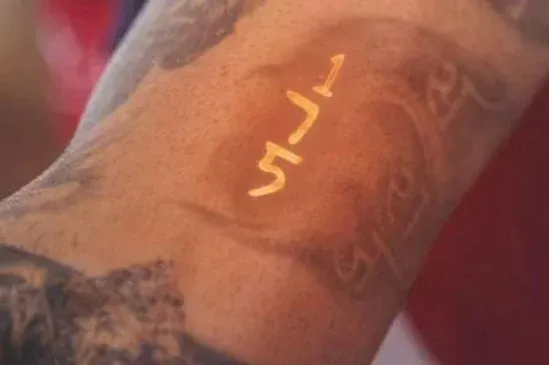
Kohli’s international journey began in August 2008 when he made his ODI debut against Sri Lanka.
He received India’s 175th ODI cap, and the number 175 became one of the most significant milestones of his early career. Having it permanently inked on his body represents the moment he fulfilled his ambition of representing India at the highest level.4. Test cap number (269)
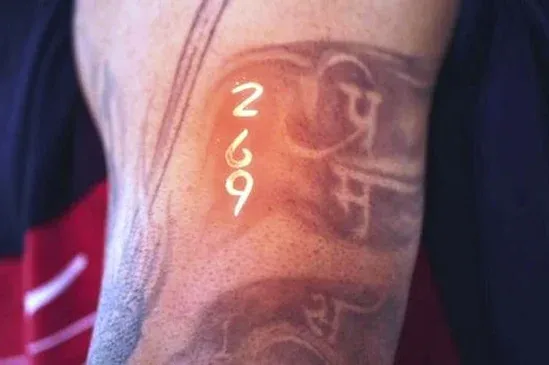
Test cricket holds a special place in Kohli’s heart, making this tattoo particularly meaningful. He made his Test debut against the West Indies in 2011 and became India’s 269th Test cricketer. The number 269 commemorates his entry into the longest format, which he has frequently described as one of the ultimate challenges in the sport.
The Warrior within: Strength, courage and determination
Kohli’s personality on the cricket field is often associated with intensity, aggression and an uncompromising desire to win. Some of his tattoos represent these qualities and reflect the mindset that has defined his career.
5. The Japanese samurai
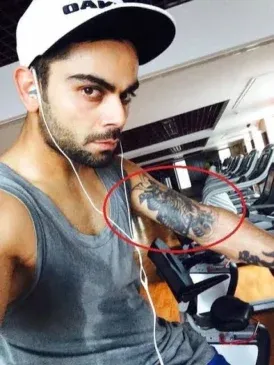
One of the most eye-catching designs in Kohli’s collection is the Japanese Samurai warrior tattoo on his left shoulder. The Samurai represents the traditional Bushido philosophy, which revolves around values such as discipline, courage, loyalty and honour. These principles closely resemble the qualities required to compete at the highest level of professional sport.
For Kohli, the warrior imagery reflects mental toughness and the determination to overcome challenges, particularly when facing difficult situations on the cricket field.
6. Tribal art
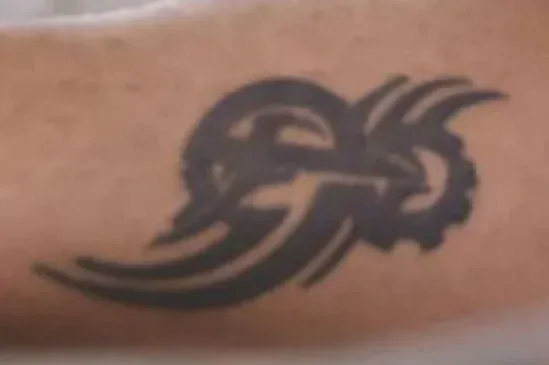
Among his earlier tattoos is an abstract tribal design on his right arm. The artwork represents strength, power and an aggressive approach towards life. It also reflects the fearless personality Kohli displayed during his early years in international cricket. The tribal pattern stands out as a representation of his competitive nature and the energy he brings to the game.
7. Scorpio Zodiac sign
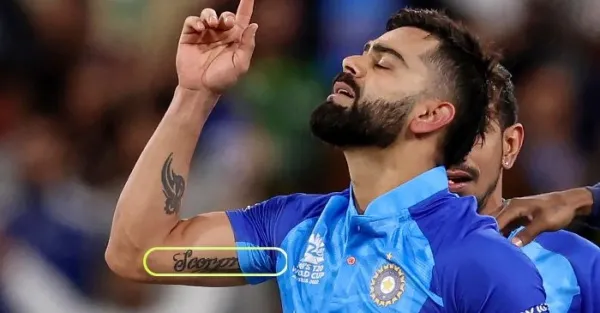
Born on November 5, 1988, Kohli falls under the Scorpio zodiac sign. He has incorporated this astrological symbol into his tattoo collection, with the design placed on his right bicep. Scorpio is traditionally associated with determination, passion, intensity and resilience.
These characteristics are often linked to Kohli’s approach to cricket, particularly his refusal to give up and his constant desire to improve.
Spirituality and inner peace: A different side of Kohli
As his career progressed, Kohli’s outlook towards life evolved. Alongside his competitive personality, spirituality and self-reflection became increasingly important themes in his personal journey. Several tattoos in his collection represent his connection with Hindu philosophy, meditation and the wider universe.
8. Lord Shiva on Mount Kailash
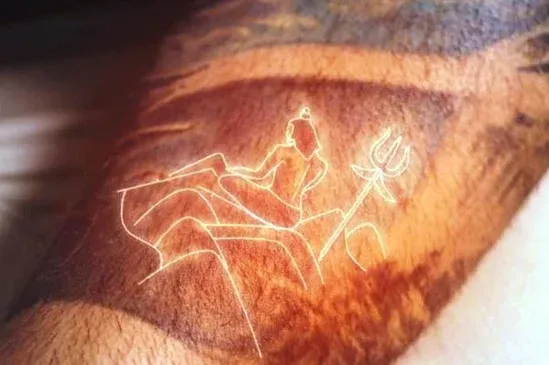
One of the most spiritually significant designs in Kohli’s collection depicts Lord Shiva meditating on Mount Kailash. The tattoo represents inner strength, tranquillity and the importance of controlling one’s thoughts and emotions. Lord Shiva is widely regarded as a symbol of transformation, with his mythology representing the destruction of negativity and the beginning of renewal.
For Kohli, the artwork reflects his spiritual beliefs and the importance of finding mental balance amid the pressures of professional cricket.
9. The sacred Om symbol
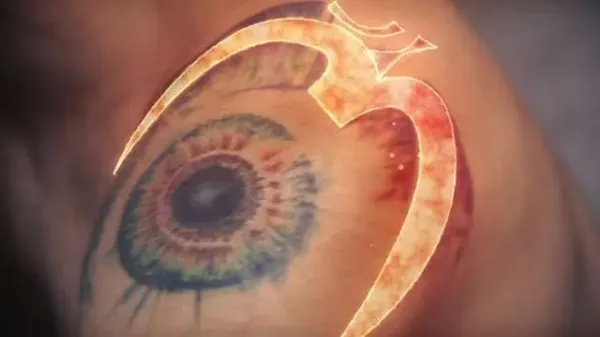
Located close to the Lord Shiva artwork is the sacred Om symbol (ॐ). In Hindu philosophy, Om is regarded as the primordial sound associated with the universe and the essence of existence. It represents spiritual consciousness, harmony and a connection with the divine.
The tattoo reflects Kohli’s interest in spirituality and serves as a reminder of the importance of maintaining inner peace and perspective.
10. The Monastery
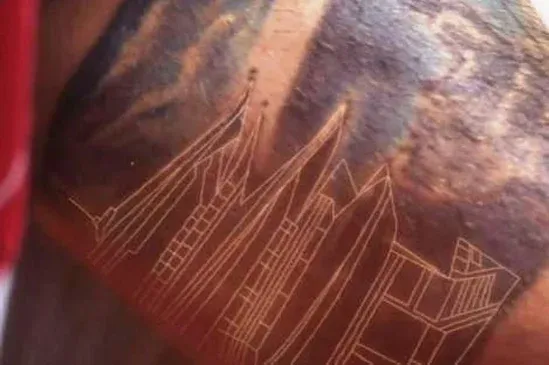
Another interesting addition to his spiritual-themed artwork is a monastery. Traditionally, monasteries are associated with meditation, solitude, learning and spiritual growth. The design represents a desire to find peace away from the distractions and demands of everyday life.
For an international cricketer who constantly operates under immense public scrutiny, the symbolism of a quiet sanctuary carries particular significance.
11. The all-seeing God’s eye
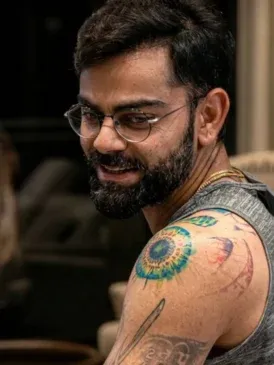
A prominent celestial eye design is another distinctive feature of Kohli’s tattoo collection. Often associated with divine observation and spiritual awareness, the All-Seeing Eye represents the idea of a higher power watching over everything.
Its symbolism revolves around guidance, consciousness and accountability. It can also be interpreted as a reminder to remain grounded and recognise that life extends beyond individual achievements.
Sacred geometry: Completing the artistic transformation
Kohli’s more recent tattoo work has introduced intricate geometric patterns and floral elements, connecting several individual designs into a more elaborate sleeve. These additions bring together artistic creativity and spiritual symbolism, giving his body art a distinctive appearance.
12. Metatron’s Cube
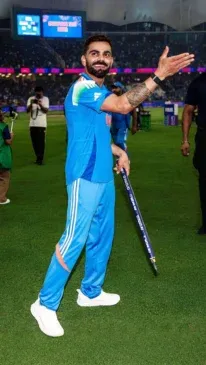
One of the most intricate elements of his newer artwork is Metatron’s Cube. This sacred geometric pattern is formed by interconnected circles and lines, creating a complex structure associated with the fundamental patterns of creation. In sacred geometry, Metatron’s Cube symbolises the interconnectedness of all things, universal balance and the flow of energy. The design adds another spiritual dimension to Kohli’s collection, representing the idea that different aspects of life are connected and contribute to a larger picture.
13. Lotus and Peony flowers
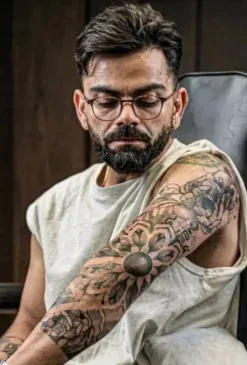
Completing the elaborate sleeve are floral patterns featuring the lotus and peony. The lotus holds deep significance in several Eastern spiritual traditions. Despite growing in muddy water, it rises above the surface and blooms beautifully, making it a powerful symbol of purity, resilience and personal growth. The peony, meanwhile, is traditionally associated with prosperity, honour, good fortune and harmony.Together, these flowers complement the geometric artwork while representing the ability to overcome difficulties, embrace personal growth and maintain balance in life.




Ranji Trophy LIVE Score, Round 4 Day 4: Tamil Nadu secures innings win over Chandigarh; Hyderabad three down in tricky chase vs Chhattisgarh, Mumbai dominates Railways
WPL 2027 Schedule OUT: Check full list of fixtures, dates and venues

3 players KKR can release ahead of IPL 2027 mini-auction

WPL 2027 Full Schedule: RCB to Face Mumbai Indians in Season Opener, Check All Fixtures, Dates and Venues