
Sandy Verma
Tezzbuzz|24-10-2026
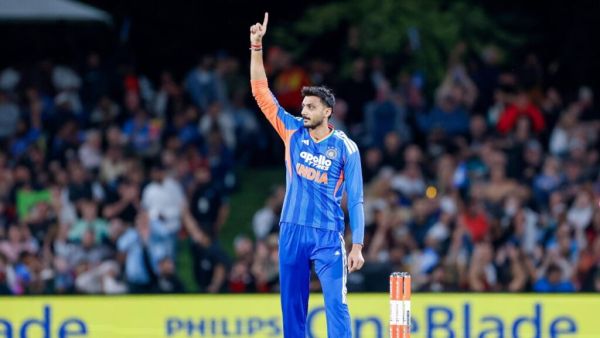
The debate about workload management in Indian cricket has once again flared up, with senior players opting to stay on board rather than rest during the recently concluded five-match T20I series against the West Indies. According to sources, the BCCI selectors had decided to keep a group of established players on ice so that the fringe cricketers could get an opportunity to show their mettle. However, a number of senior members of the squad appear to be keen to stay in the fray.
The series saw a 2-2 draw after the fifth and decider T20I was washed out. While the selectors had been understood to want to see how India's replacements would fare, the players' reported reluctance to vacate their positions has revealed a more significant challenge for Indian cricket: the dilemma of managing between the demands of a congested international schedule and the cut-throat competition for national team berths.
India's schedule has left little room for reprieve. By October 22, 2026, the reigning T20 World Cup champions had played 36 T20Is during the year, the most by any team, according to the figures cited in the report. With several assignments, international travel and limited recovery periods, the question of the best way to utilize the workload of India's premier players has become more and more significant.
India's packed calendar puts workload management under scrutiny
Since June, the Indian men's team has had a hectic time with a series against Ireland, England, Zimbabwe, Afghanistan, Japan, the Asian Games, and the West Indies. Players have had to contend with both international and multi-sport events while switching between different conditions and time zones.
Sources revealed that the selectors were looking to use the West Indies as an opportunity to give fringe players a chance to demonstrate their value.
However, several older players, having already played in the Asian Games in Japan, expressed interest in playing in the five-match series as well.Their statements highlight the precarious position that they are in: although players understand the need to rest, they cannot ignore the opportunity to play in crucial selection matches. With many young talents vying for a spot in the team, sitting out even one match can give those lower down the pecking order a much-needed opportunity.
To make things worse for the older players, T20 cricket gives players very few chances to assert their authority over the game, and one “bad” game can lead to a player's entire season being derailed.
Players who have been able to use a bye week to gain selector attention and put in a stellar performance can ruin a player's hopes of playing again for months. This can make older players, fearing being replaced, hesitant to take a break when needed. This is especially true in limited-overs cricket, where players are much more likely to make an impact in the shorter formats.
India has had cases of players being inserted into the team as a replacement for another player, and the latter capitalizing on the opportunity to prove their worth.
This can make it doubly hard for senior players to take a break, especially when they are not sure if they will retain their spot in the team.This can create even more problems for the selectors. Although it is important to rotate in fresh players to test out the bench and create a healthy hierarchy, convincing a rested and ready player to take a break can be equally challenging given the circumstances. Especially when players realize that they need to stay in the game to retain their positions, the pressure on the selectors only increases.
India's next destination is New Zealand, where they will have to contend with an even busier schedule, with five T20Is, three ODIs, and two Tests on offer. This will be the first time that many players will have to contend with back-to-back overseas tours, which can take a toll on their bodies, given the conditions, travel time, and acclimatization needed before any match.
Although players' bodies will handle the strain differently, it can be difficult for many to deal with such a packed schedule. Fatigue, injuries, and general malaise can combine to affect a player's performance. While workload planning can help alleviate some of these concerns, there are multiple factors to consider beyond just appearances before deciding whether a player should take a break or not.
The selectors will have to deal with similar dilemmas in the near future, and the situation with the West Indies offers them an opportunity to test out their ideas before the tour. The West Indies players' statements, on the other hand, reveal the precarious position that they are in. Their comments highlight the dilemma that many senior players can find themselves in, having to decide between much-needed rest and staying motivated enough to retain their positions.
Where does Vaibhav Sooryavanshi fit in?
Players such as Vaibhav Sooryavanshi, on the other hand, raise an interesting prospect. Sooryavanshi has had an incredible junior career, with his explosive hitting ability drawing comparisons to some of the game's best. At only 15, the teenager is only beginning to realize his potential, and his inclusion in the senior squad is only a matter of time. However, he has a long way to go before he can be considered a regular T20I opener.
Simply having an incredible junior record is not sufficient to earn a spot in the senior team, as there are several other factors that selectors will consider before naming him in the team. Team combinations, tactics, and general performance are all taken into account, and the selectors will have plenty of time to analyze the young sensation.
Sooryavanshi is certainly not being rushed into the senior team, and there is no reason that the management should feel the need to do so. However, with the current circumstances, it is unlikely that the selectors will be able to use the West Indies series to give other young players an opportunity, which can further hurt their chances of breaking into the team.
A more systematic approach to this issue would be to utilize a rotational policy, wherein the selectors allow fringe players to showcase their abilities in a bilateral series. This would allow the selectors to evaluate new names for the team while also giving the senior players a much-needed break. This can also be done in a more systematic manner, as the selectors can determine what each player needs before making any decisions.
The BCCI needs to develop a systematic approach to workload management that takes the players' individual needs into account. At present, the balancing act between players wanting to play and the selectors needing them to take a break has caused a number of issues, such as the current dilemma with West Indies.
While it makes little sense to leave such an important decision to the players' discretion when they see a break as an opportunity to be replaced, it also makes little sense to disrupt the team's balance when they are playing at their best.
A comprehensive review of individual requirements can help, wherein the selectors can determine a player's requirements before they can be rotated out. This can help regularise the selection process, as well as put the younger players on notice that they will always get their opportunities when they arrive.
With the number of international fixtures crowding India's cricket calendar, the selectors need to utilize a systematic approach to rotation management.
This will ensure that the senior players' opportunities are maximised, and the next crop of stars is ready to fill in when they retire or are unavailable. India will eventually reach a point where it is no longer deep enough to sustain this kind of schedule, but until then, the BCCI must ensure that the workload management system keeps the team balanced and ready for the long haul.




WTC points table: Australia remains at number 1 despite 'shameful' defeat

WATCH: Abhishek Sharma's Hilarious Punjabi Punchline Sends Gambhir, Team India Into Laughter

Asian Para Games 2026: India created history, the country stood fourth with 103 total medals; Mona Aggarwal made world record in shooting
Top 5 highest successful run chases in ODIs ft. Sri Lanka