

Prateek Thakur
abplive|21-10-2026
India vs New Zealand T20I: Former New Zealand fast bowler Shane Bond believes Bhuvneshwar Kumar’s ability to exploit swing and seam movement could make him a dangerous prospect for the Black Caps in the upcoming T20I series against India. Bond also highlighted the veteran pacer’s composure in pressure situations, particularly during the death overs.
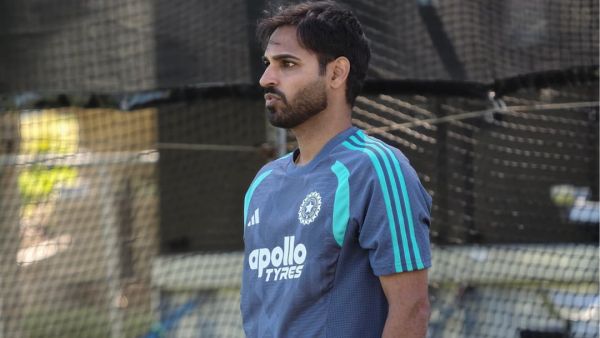
Bhuvneshwar has returned to India’s T20I squad after nearly four years away from the format. His selection follows strong performances in the Indian Premier League, where he helped Royal Challengers Bengaluru win consecutive titles in 2025 and 2026, according to the supplied report.
Bond welcomed the experienced pacer’s return to international cricket and believes his presence could provide India with an important option at both ends of an innings.
“It's great to see Bhuvi back in the international circuit. He's a great bowler and has been so good in the IPL for so long,” Bond told IANS.
Shane Bond Explains Why Bhuvneshwar Kumar Could Be Dangerous
Bond believes Bhuvneshwar’s experience makes him a valuable presence in India’s bowling attack, particularly when matches reach their closing stages.
“It's always nice to have a senior bowler in your team, particularly in those death overs where, alongside the captain, you can lean on him,” he said.
The former New Zealand fast bowler also backed Bhuvneshwar to make the most of conditions that assist seamers, pointing to his ability to move the ball early in an innings.
“I'm looking forward to watching him bowl, particularly in conditions that might swing and seam because he can be lethal with the new ball, let alone being a quality finisher,” Bond said.
Bond believes the timing of the series could favour fast bowlers, with New Zealand entering the early part of its cricket season. He expects bounce and sideways movement across the different venues, although the extent of assistance available to the seamers remains uncertain.
“If you're going to play against India at home, it's probably a good time of the year to play them, particularly if you're a fast bowler, because they do have such an imposing batting line-up,” he said.
Bond added that the fast-bowling group performing better could ultimately prove decisive in the series.
“Usually in New Zealand, that's the difference-maker. The better-performing fast-bowling group is likely to win you a series,” he said.
Shane Bond On New Zealand Pitches And The Challenge For Batters
Bond identified the nature of the pitches as one of the biggest unknowns ahead of the series. The teams will play across Christchurch, Wellington, Auckland and Hamilton, with a mixture of drop-in and traditional surfaces offering different conditions.
He explained that the ideal bowling length in T20 cricket does not change significantly, even when conditions vary.
“Generally, with the length in T20Is, it doesn't change too much. You're looking to hit a 6-7 metre length and if you've got any sort of sideways movement and bounce in any wicket, that's generally the toughest length to bowl,” Bond said.
The challenge for bowlers, he added, is maintaining that discipline when batters attempt to disrupt their rhythm by attacking different deliveries.
“The bigger question is: are the wickets going to swing and seam in particular?” he said.
“If you find that length consistently and the ball does move, then it becomes very difficult.”
Bond expects India to adjust to the pace, bounce and possible movement of the pitches, while the cold and windy weather could present an additional challenge for the visitors, particularly in the field.
“It'll be for India to adapt to the pace, bounce and perhaps the movement of the pitches here. The cold might be a factor as well,” he said.
He added that adjusting to conditions early in the season could be particularly demanding for India's batters after a home series.
Bond Sees New Zealand Tour As Preparation For T20 World Cup 2028
Bond also highlighted the importance of giving India's younger fast bowlers experience in conditions similar to those they could encounter at the 2028 T20 World Cup, which will be co-hosted by Australia and New Zealand.
He referred to Prince Yadav's IPL performances and said exposure to New Zealand's conditions could help emerging bowlers prepare for a major international tournament.
“They've certainly got pace and if you look ahead to the next World Cup, which will be played in New Zealand and Australia, there's an opportunity to bring some young bowlers over who could potentially make that team and allow them to experience the conditions, training environments and just what it's like to travel around New Zealand,” Bond said.
Bond added that such experience, alongside the India A team's presence in the country, could make a difference when the World Cup arrives.
Ground Dimensions Could Influence India-New Zealand T20I Series
Bond also pointed to the contrasting dimensions of New Zealand's grounds as a factor that could influence tactics. He compared Hamilton with Bengaluru's M Chinnaswamy Stadium, while identifying Eden Park in Auckland as a particularly challenging venue because of its short straight boundary.
“Eden Park is probably the biggest challenge, where the straight boundary is around 45 metres, and teams often struggle with that,” he said.
He explained that the larger square boundaries can encourage batters to target the shorter straight boundaries, while the pitch's pace and bounce can make conditions difficult for spinners.
Bond described Christchurch as a more traditional-sized ground and a suitable venue to begin the series. He expects scoring rates to rise as both teams become familiar with the conditions.
“Both teams are pretty used to that now when you see the volume of runs scored in the IPL. So expect some high-scoring games, particularly in the back end of the series when the teams find their feet,” Bond said.
For Bhuvneshwar, the conditions could offer an opportunity to use his experience and new-ball skills against New Zealand. As Bond emphasised, however, the impact of swing and seam movement will depend on how the pitches behave once the series begins.






India Thrash Zimbabwe By 92 Runs To Complete 3-0 Women’s T20I Series Sweep

'Where are the fans?': David Warner fumes over sparse crowds in South Africa-Australia Test series

Gill-Iyer can create history in ODI, Indian captain has not been able to make this record till date!

Bhuvneshwar Kumar earns massive praise from Jacob Duffy ahead of NZ vs IND T20I series