

Sandy Verma
Tezzbuzz|11-10-2026
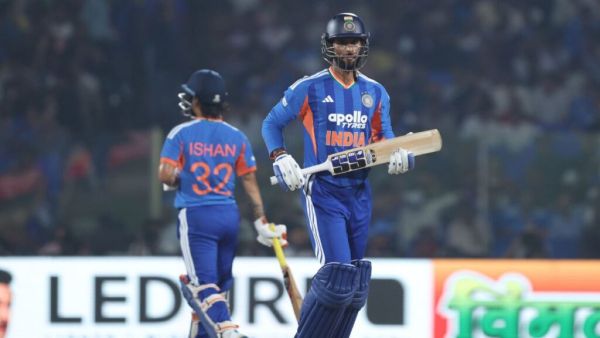
Cricket is a sport of shifting sands, and a player's career can be turned upside down in an instant due to an ill-timed injury or tactical shift. Tilak Varma has faced a roller-coaster of events on his way to 2026, evolving from an early prospect to a new experiment in India's T20 batting lineup.
Not long ago, the southpaw was set to evolve as the mainstay at No. 3 in T20Is for years to come. He was reaping the rewards of his efforts as he climbed up the charts to No. 2 in the ICC T20I batsman rankings. However, a timely injury before the T20 World Cup 2026 and Ishan Kishan's rise in the limited-overs format saw him pushed down the order.
Though he has struggled initially to adapt to the new role, Tilak has taken the change in his stride and has evolved as a finisher. With India in need of a reliable lower-order finisher due to Hardik Pandya's injury and the inexperience of someone like Ashutosh Sharma, he has stepped in to fill the void.
Varma's recent form with the bat has been sensational as he has showcased his ability to control the momentum in the middle and later stages of the innings. In his last two knocks, he has remained unbeaten in both innings, scoring 51 (22) balls against Pakistan in the Asian Games 2026 Final and 44 (18) balls in the IND vs WI 2026 series.
Here are three reasons why Tilak Varma is poised to become India's mainstay finisher in T20I cricket
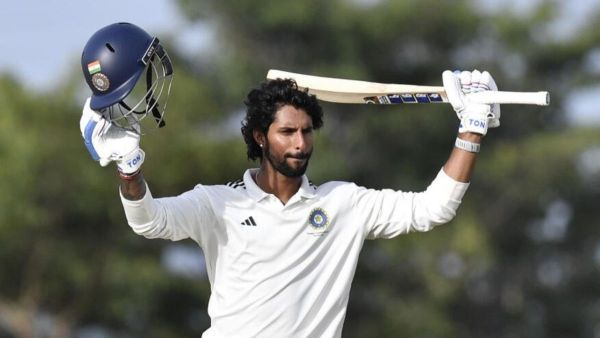
1. A Boundary Every 3.09 Deliveries in the Death Overs
While Varma's T20I mastery against spin in the middle overs has been highlighted, he sheds his anchor skin at the death, becoming someone else entirely.
The left-hander possesses a 360-degree range of strokes and has the rare ability to accelerate straight away from his first ball at the crease.Varma's raw power potential is often hidden by the elegance in his strokes, but the numbers don't lie. He has smashed 31 boundaries (including 22 sixes) in 96 deliveries he has faced in the death overs this year. That's a boundary every 3.09 balls, regularly elevating India's totals from competitive to emphatic.
To put that into perspective, established finishers like Rinku Singh and Hardik Pandya average a boundary every 3.38 and 3.70 deliveries respectively in the same phase.
2. Second-Highest Strike Rate and Average Worldwide
Hitting at a strike rate of 238.54 in death overs is sensational, particularly given how crucial the middle and death phases are in modern T20I cricket.
Varma has plundered 229 runs off 96 balls in 2026 to register a strike rate of 238.54 – the second highest among all batters globally. Only Jason Holder (243.40) has a better strike rate this year.
Domestically, Varma's strike rate is in a class of its own – Hardik Pandya and Shivam Dube's respective strike rates of 208.33 and 197.83 pale in comparison.
In addition, the left-hander is one of only two batters globally to boast of a strike rate of more than 50.00 in death overs this year. His average of 57.25 is better than everyone in the world barring Sherfane Rutherford (90.50).
3. Dismissed Just Four Times in 11 Death-Over Innings
Batters facing yorkers in the death overs are expected to hoist the baton frequently, and their dismissals often result in a waste of the strike as batsmen need to regroup and adapt to the new bowler's lengths and yorkers.
Varma's value in the T20I format is best highlighted by the fact that he has been dismissed just four times in the 11 innings he has batted in the death overs this year.
The results are even better when we consider his last 10 T20I innings. The batter has been out only twice (once run out) in the last 10 T20I innings he has played.
Since his transition to the middle-order, Varma has remained not out 11 times in 20 innings. In six of these innings, he has batted through more than 10 deliveries, allowing India to accelerate at will.
The Road Ahead
Tilak Varma's transformation from a T20I spectator to a finisher could have easily disheartened a lesser-known player, but the young left-hander has embraced his new role with a vengeance, wielding the bat with precision and power.
As India transitions into a new era of limited-overs cricket, its find of a dependable finisher could prove to be its most important discovery in years.





'Instead of bowlers, install bowling machines', Yuzvendra Chahal angry over flat pitches

Mohammed Shami’s recall to Team India looks difficult, says former batter

Pakistani Cricketer Backs Delhi Police Amid CJP Protest, Makes Big Statement

Virender Sehwag sees a bit of himself in Vaibhav Sooryavanshi: The explosive former batter compared his own thinking to the 15-year-old sensation