
Suyash Sahay
abplive|23-09-2026
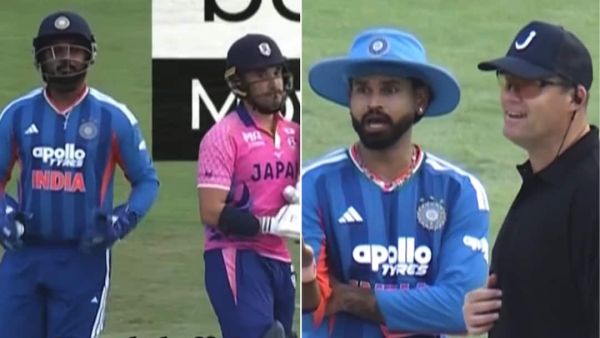
India vs Japan Wide Ball Row: India survived a dramatic final-over scare against Japan on Tuesday, but the narrow two-run victory was overshadowed by a contentious umpiring. With Japan chasing 33 in a five-over contest, the hosts needed six runs from the final four deliveries. Alexander Shirai-Patmore attempted a reverse-hit against Axar Patel and missed a ball that travelled down the leg side. The umpire initially signalled a wide. India, however, immediately objected to the next delivery when a similar call was made, prompting a discussion between the officials before the decision was overturned.
Why Was The Wide Decision Reversed?
The second delivery had again passed down the leg side after Shirai-Patmore moved across his crease to attempt another reverse shot.
The initial wide call would have reduced Japan’s target substantially, but India’s protests led the umpire to consult Chris Brown at the non-striker’s end before changing the decision.
Notably, as per MCC's Law 22.4.1:
"The umpire shall not adjudge a delivery as being a Wide, if the striker, by moving, either causes the ball to pass wide of him/her, as defined in 22.1.2 or brings the ball sufficiently within reach to be able to hit it by means of a normal cricket stroke."
Check Out: Haaland Recreates Viral AI Restaurant Meme With MrBeast
Reverse sweeps and switch-hits have made such situations increasingly difficult to judge, particularly when batters move significantly across the crease before playing the shot.
MCC Law Also Allows Umpire To Change Call
The reversal itself is permitted under the Law 2.12 , provided the alteration is made promptly and does not conflict with the dead-ball law.
"An umpire may alter any decision provided that such alteration is made promptly and does not contradict Law 20.6 (Dead ball not to be revoked). This apart, an umpire’s decision, once made, is final."
Once the wide was withdrawn, Japan’s equation returned to six runs from three balls.
The hosts managed only three more runs from the remaining deliveries, ending on 30/3 as India secured a two-run victory.
The result gave India the distinction of defending the lowest total successfully in a T20 match, while the contest also marked the first men's T20I meeting between India and Japan.
The result gave India the distinction of defending the lowest total successfully in a T20 match, while the contest also marked the first men's T20I meeting between India and Japan.


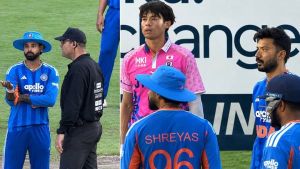
WATCH: Shreyas Iyer’s Umpire Clash Goes Viral After Controversial Wide Call Rocks Japan T20I

Shreyas Iyer enters history books, becomes first captain to do this in India-Japan 5-over T20I

Shafali Verma creates history, surpasses Laura Wolvaardt to become highest run-scorer in women's T20Is in a calendar year

JPN vs IND Playing 11: Who Will Claim Victory?