
Sandy Verma
Tezzbuzz|22-09-2026
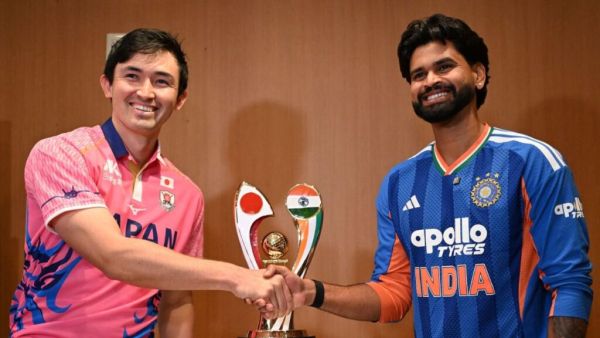
In the quiet city of Sano, Tochigi Prefecture, home to some of Japan's most famous ramen shops rather than athletes, a historic opportunity is coming up. The small city near Tokyo is set to host one of its most high-profile events ever, on Tuesday, the Autumnal Equinox Day.
Sano, which has a population of just over 110,000, is used to attracting ramen lovers, not world-class sportspeople. But on Tuesday, the city will see the arrival of the Indian men's team.
For Japan's cricket, it is a watershed moment, after years of laying the foundations, spreading the game and developing ambitious players.
Temporary Fixes, Permanent Ambitions: India vs Japan
The preparations for cricketing royalty in this city, still finding its feet in the sport, are remarkable. The venue's three permanent stands can hold a modest 500 people, leading to a JCA (Japan Cricket Association) mobilizing temporary dressing rooms, showers and seats in an effort to get the capacity up to 2,000.
That there exists an opportunity for India to play here has been a product of a remarkable series of events across the last 18 months. A call from the JCA to move one of its decade-old squares saw the COO, Alan Curr, spot a golden opportunity.
Nagoya was laying pitches for the Asian Games using the local clay, so Sano decided to use the same.With Full Member teams needing practice facilities ahead of the Asian Games, the JCA threw open their doors for anyone that wanted to train. Somewhere down the line, during the annual ICC conference, Japan put in a cheeky follow-up question asking, 'fancy playing us?' India said yes.
For local players such as Wataru Miyauchi – a man who has pulled on the armband for Japan in 36 T20Is – it is a marvelous chance to measure themselves against opposition of this standard.
“Playing against such a high-standard team is essential to see how good we are, as a Japanese team,” he says. “I believe this is a great opportunity for me to improve my skills in the future, but I also want to look at how strong their team is and how we can improve ourselves.”
The squad will not be looking solely at the score, either. Makoto Taniyama wants to see how India prepares and plays tactically, while Kohei Kubota is looking to learn more about the artistry and decision-making under such a high-profile atmosphere.
A chance to play against a dominant world side has been a long time coming. Thanks to a JCA-led program of partnerships, Japanese players have had the chance to play and train in South Africa, facing the Titans, and in Sri Lanka, competing in their Lanka Premier League. Meanwhile, domestic competitions have seen overseas stars such as Dimuth Karunaratne, Josh Brown and Will Bosisto slot directly into the Japan Premier League (JPL) – providing a chance to learn first-hand that television cannot provide.
A City Steeped in Cricket Culture
Away from the white lines on the turf, the sport has found a way into the culture and traditions of Sano.
Declared Japan's first “City of Cricket” in 2008, the municipality takes pride in celebrating the sport and its quirks and oddities.The Mascot: Sanomaru, the city's mascot, has been seen wandering Tanuma Station brandishing a cricket bat as a samurai sword, with a ramen bowl on his head.
The Station: Tanuma Station saw a major facelift last year, incorporating history and a cricket-friendly theme, including walls decorated with images of the sport.
Pop Culture Connections: Cricket has even found a way into the city's manholes, which have been replaced with five special covers featuring characters from the anime Black Butler, inspired by the JCA advising the series on its cricket needs.
Sustainable Growth and the “Japan Way”
While the national team continues to make waves, the sport at a grassroots level grows. The number of registered players has risen exponentially since 2020, from approximately 3,500 to 8,800 currently, with almost 20,000 taking part in recent years. There has also been a sharp increase across the levels of competition on offer. In Sano alone, an A team, an Under-16 side and a new Under-19 women's team now exist. Meanwhile, the addition of LA 2028 to the Olympics has brought in vital personnel, including a full-time strength-and-conditioning coach.
While professional cricket remains a dream, some local players still fund their own trips to play in the JPL. However, the system is beginning to pay off, with Ayaka Kato-Stafford securing a rookie contract with the Brisbane Heat after spending time playing and improving her game in Australia.
Curr talks of the “Japan way” – building the sport in a sustainable, slow-burn manner. Whatever the result on Tuesday, it is a lesson that will be noted.
“Whatever the outcome, we have to accept it,” says Miyauchi. “We have a Samurai spirit that does not give up easily.”





Kangaroos had done this dirty work on the field before the sandpaper controversy, De Villiers revealed

“I thought Zimbabwe deserved to win”: Australia captain Mitchell Marsh opines on his team’s success
Before the match against India, Australia played a big bet, made this Indian spin 'guru'
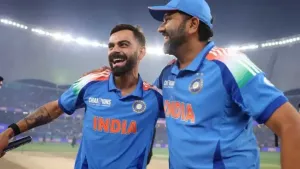
“Whether Virat and Rohit are part of the team or not”: Former Indian selector on star players’ future