Prateek Thakur
abplive|20-09-2026
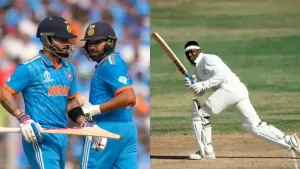
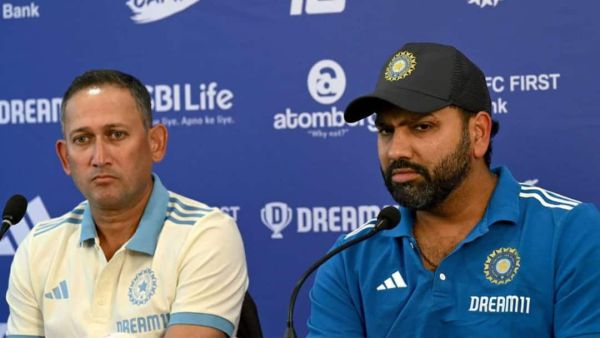
Ajit Agarkar’s decision to step down as India’s chief selector reportedly followed a series of disagreements involving Rohit Sharma’s ODI future, VVS Laxman, player management and his absence from a crucial review meeting.
Rohit Sharma Row Put Agarkar In Difficult Position
The first major issue reportedly emerged before India’s white-ball series against England, when the selection committee discussed Rohit Sharma’s future in ODI cricket.
Agarkar’s committee, along with the team management, reportedly decided that Rohit’s ODI career would end after the Lord’s match, with Pragyan Ojha asked to communicate the decision.
Rohit, who remains keen on playing at the 2027 ODI World Cup, was reportedly unhappy with the manner in which the decision was communicated and contacted a senior BCCI administrator.
The board subsequently asked Agarkar to slow down the process, pointing to Rohit’s consistent run-scoring. Agarkar reportedly maintained a different view about India’s long-term planning.
He believed Yashasvi Jaiswal would need around 20 ODIs before the 2027 World Cup to establish himself, while there were no guarantees Rohit would remain effective in South African conditions.
The situation reportedly reached a critical point when the BCCI issued a public statement backing Rohit and dismissing speculation surrounding his retirement from ODI cricket.
“That was perhaps the day when Ajit knew that it would be very difficult for him to continue. In fact, he had no inkling that a media statement was issued by the BCCI,” a senior BCCI official told PTI.
“He understood that going forward, the call on big names won't be his prerogative,” the official added, according to the report, describing the episode as a significant moment in Agarkar’s thinking.
Agarkar And VVS Laxman Reportedly Clashed
At the same time, Agarkar reportedly had differences with VVS Laxman, chairman of the BCCI Centre of Excellence, over injured players and the scheduling of India A fixtures.
A former state team coach who had observed Laxman’s work closely told PTI that the former India batter always wanted his strongest possible team available for every competition.
“If you think that VVS Laxman's urge to win at all costs is anything less than, say, a Virat Kohli or a Sourav Ganguly, then you are mistaken,” the former coach told PTI.
“Whatever the competition, Laxman always wanted the best eleven to play,” the coach added, highlighting the approach that reportedly contributed to disagreements.
One major dispute concerned India’s participation in the Asian Games. Agarkar reportedly questioned why the main squad needed to be fielded at what he considered a secondary cricket competition.
Scheduling issues added another layer of tension, with India A matches repeatedly overlapping domestic tournaments, including the Irani Cup, according to the PTI report.
An India A series against New Zealand A also reportedly clashed with the senior team’s white-ball fixtures, creating further complications around player availability and workload management.
Injury Management Also Became A Flashpoint
The report also highlighted disagreements over how injured centrally contracted players were managed, with the Centre of Excellence reportedly not providing specific recovery timelines.
Mutual mistrust reportedly increased after a detailed and confidential injury list involving several prominent players was leaked to the media, further complicating relations between the concerned parties.
England Review Meeting Became Final Trigger
The final episode reportedly came after India’s Test series defeat in England, when the BCCI called a review meeting in Mumbai to assess the campaign.
Agarkar did not attend the meeting in person and also did not join remotely, despite its importance for discussing India’s performance and future plans.
BCCI secretary Devajit Saikia subsequently defended Agarkar, saying the meeting had been called at short notice while the chief selector was away.
However, the PTI report said several people within the board believed Agarkar should have made the review a priority, adding another source of friction around his position.
Agarkar’s reported exit therefore comes after several issues accumulated over time, rather than being linked to one disagreement alone, with the Rohit episode emerging as a major catalyst.
Asian Games 2026: India's Cricket Team Faces Jersey, Hotel Issues Ahead of Japan Departure
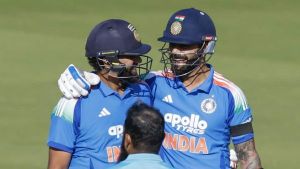
India vs West Indies: 8 Matches, Kohli-Rohit In Action! Check Full Schedule
Pat Cummins’ Toughest Indian Opponent Isn’t Kohli Or Rohit: Here’s Who He Picked
At 18, he hit a century on Test debut and was hailed as the next Sachin Tendulkar; 9 years later, Prithvi Shaw is still fighting for a comeback amid an engagement split