
Prateek Thakur
abplive|30-10-2026
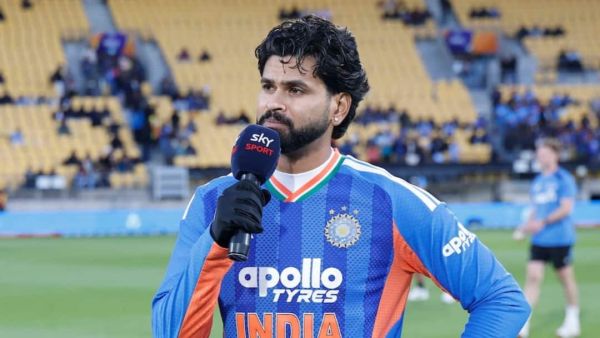
Shreyas Iyer's appointment as India's T20I captain brought a new leadership chapter after Suryakumar Yadav's tenure. Since taking charge in June 2026, Iyer has overseen a mixed start, with difficult results against Ireland and England followed by a recovery that included series wins and India's Asian Games gold medal. His leadership deserves to be assessed on its own merits. However, a different question concerns his place in the batting order: are his performances with the bat keeping pace with the demands of India's evolving T20 approach?
Through India's third T20I against New Zealand on October 27, Iyer had scored 644 runs in 24 T20I innings since becoming captain. He had a batting average of 32.20 and a strike rate of 147.71, with one century and two half-centuries. His highest score was an unbeaten 102 against West Indies in October.
Those are respectable numbers, and the century was a reminder of what Iyer can offer when he gets going. Yet, the larger question is not whether he has produced some substantial innings. It is whether his overall contribution is consistent enough for a team that increasingly expects its batters to maintain pressure on the opposition throughout an innings.
Shreyas Iyer's Captaincy And Batting Need Separate Assessments
There is a case for giving Iyer credit as captain. India's results improved after a difficult start to his tenure, and the team went on to win the Zimbabwe and Afghanistan series before securing gold at the Asian Games. His leadership record, through October 27, stood at 14 wins, eight defeats and two no-results in 24 matches.
That record offers grounds for a positive assessment of his captaincy, although the early defeats in Ireland and England remain part of the picture. More importantly, a captain's tactical decisions, management of resources and ability to get results should not automatically determine whether he deserves a place as a batter.
Iyer's position in the team has to be judged by what he contributes in the middle order. The captaincy may provide him with a degree of continuity, but it cannot make his batting output immune from scrutiny. India have enough competition in their squad for every place to carry expectations.
The Numbers Show Both Iyer's Potential And The Concern
Iyer's 2026 T20I campaign has included several important contributions. His unbeaten 102 off 43 balls against West Indies was a standout performance, while an unbeaten 80 against England and a 68 earlier in that series also demonstrated his ability to play substantial innings.
His 42 off 28 balls in the first T20I against New Zealand was another useful contribution in a successful chase. These performances show that Iyer can score at a tempo suited to modern T20 cricket. His strike rate of 147.71 across the period is also not insignificant.
However, the returns have not been uniformly convincing. He made 3 and 10 against Ireland, scored 5 and 28 in the first two matches against England, and had a sequence of modest returns against Afghanistan and Japan. His 21 off 24 balls in the Asian Games final against Pakistan also stands out because it came in a high-profile contest where India's middle order needed to keep the scoring rate moving.
The recent New Zealand matches have added to the debate. After making 42 off 28 balls in the series opener, Iyer scored 7 off 11 and 5 off 10 in the next two games. Two low scores do not define a batter, but they do reinforce the need for greater consistency.
Does Iyer Fit India's Current T20 Batting Template?
India's T20 approach has increasingly placed a premium on attacking intent. The aim is to make use of the powerplay, keep the scoring rate high through the middle overs and retain enough firepower for the final overs. With aggressive options such as Abhishek Sharma, Sanju Samson, Tilak Varma and other multi-dimensional batters in the squad, the competition for middle-order positions is substantial.
That does not mean every batter must play at the same pace. A team still needs players who can read match situations, rebuild after early wickets and take responsibility when a chase becomes difficult. Iyer's experience and ability to play spin can offer India a different dimension.
But there is a distinction between being capable of anchoring an innings and allowing the scoring rate to stagnate. In India's current setup, a middle-order batter must be able to absorb pressure without transferring it to the players who follow. Iyer's 21 off 24 against Pakistan and his recent returns against New Zealand raise questions about whether he is consistently striking that balance.
The argument is not that Iyer should attempt to hit every ball out of the ground. It is that his role needs to produce a clearer return: either by accelerating when the platform is set or by making a substantial contribution when India lose early wickets. His best innings show that he can do both, but the frequency of those performances remains central to the debate.
Is Shreyas Iyer Deserving Of A Place As A Batter?
The evidence does not support writing Iyer off. A strike rate close to 148, a century and two fifties in 24 innings are meaningful contributions. He has also come close to surpassing Rohit Sharma's record of 656 T20I runs by an Indian captain in a calendar year, with 644 to his name through October 27.
At the same time, cumulative runs alone cannot settle the selection question. The role, the match situation and the impact of those runs matter. India's batting depth means that Iyer will be competing with players who can offer greater boundary-hitting frequency, flexibility across positions or a more consistent attacking return.
The fairest conclusion is that Iyer has made a credible case as captain, but his place as a batter should remain open to performance-based scrutiny. His leadership record and his batting value are two separate matters. India can back him to lead the side while still demanding more from his individual game.
For Iyer, the next step is not simply to add to his run tally. It is to make his runs count more consistently in the manner India want to play T20 cricket. In a team built around explosive starts and powerful finishes, being a dependable middle-order batter is valuable. But dependability must also come with the ability to keep the game moving.



Nitish Reddy Makes His Two-Way Case
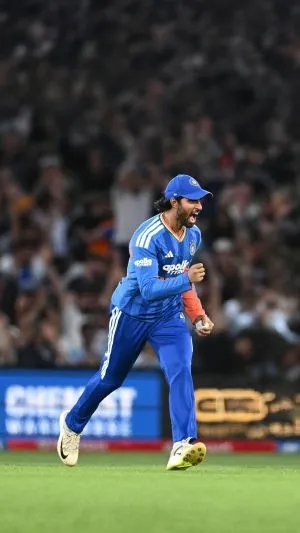
Tilak Varma opens up on India's chances to defeat NZ 5-0 in the ongoing T20I series

DC predicted XI, WPL 2027: Squad composition, full list of players after auction for Delhi Capitals
Tanush Kotian created panic by taking 11 wickets in the match, staked claim for Team India